Death of Chinese Researcher at University of Michigan Triggers International Diplomatic Dispute and Campus Fear
Danhao Wang, an Assistant Research Scientist in Electrical Engineering, Died March 20 After Federal Questioning — China's Ministry of Foreign Affairs Is Demanding a Full Investigation.
By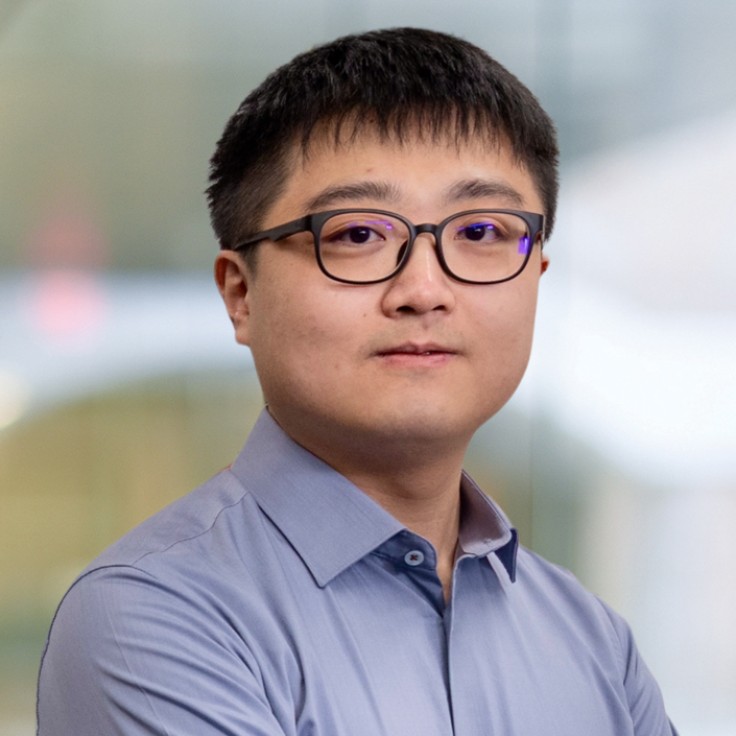
The death of a Chinese research scientist at the University of Michigan has become an international diplomatic incident, triggering demands from the Chinese government for a full investigation, a vigil organized by campus groups, and an urgent warning from the university's postdoctoral researchers union that international scholars must understand and exercise their legal rights.
Danhao Wang, 30, an assistant research scientist in the University of Michigan's Department of Electrical Engineering and Computer Science, died on March 20 after falling from an upper level inside the George G. Brown Building on campus, according to university police. The UM Department of Police and Public Safety is investigating the incident as a "possible act of self-harm," according to spokesperson Melissa Overton. A toxicology report is pending.
CBS News Detroit confirmed that Wang died shortly after speaking with federal investigators. The FBI has not publicly commented on its questioning of Wang or any related investigation.
Who Danhao Wang Was
Wang joined the University of Michigan in 2022 as a postdoctoral research scientist in the College of Engineering, working in the laboratory of Professor Zetian Mi, a leading researcher in semiconductor materials. He had recently been promoted to the role of assistant research scientist.
Dean of Engineering Karen Thole wrote to the College of Electrical and Computer Science community on March 23: "Dr. Wang was a promising and brilliant young mind, whose research into wide bandgap III-nitride semiconductor materials and devices published in Nature stands as a landmark, uncovering for the first time the switching and charge compensation mechanisms of emerging ferroelectric nitrides. His loss is felt deeply not only by those who knew him here at the University, but also everyone who understands his potential to have contributed to breakthroughs in science that would have positively impacted people around the world."
Thole also warned the university community against misinformation generated by artificial intelligence, noting the investigation was ongoing and facts were still being established.
China's Diplomatic Response
The Chinese government has moved forcefully and publicly to characterize Wang's death as the direct consequence of federal harassment of Chinese scholars on American campuses.
China's Ministry of Foreign Affairs issued a statement without naming Wang specifically, saying a University of Michigan researcher had "taken his own life after being subjected to hostile questioning by U.S. law enforcement personnel." The ministry called the incident emblematic of a broader pattern. "These moves infringe on Chinese citizens' legitimate and lawful rights and interests, poison the atmosphere of people-to-people and cultural exchanges between China and the U.S., and create a serious chilling effect," Foreign Ministry spokesperson Lin Jian said.
Liu Pengyu, spokesman for China's embassy in Washington, confirmed to the South China Morning Post that Wang had taken his own life and said the U.S. had "overstretched" the concept of national security. The Chinese Consulate General in Chicago said it had "lodged stern representations to the relevant departments of the U.S. government and relevant universities on this case many times." The consulate called on the U.S. to "carry out a full investigation, give the family of the victim and the Chinese side a responsible explanation, stop any discriminatory law enforcement targeting Chinese students and scholars in the U.S., and stop imposing wrongful convictions."
The University's Response and the Postdoc Union Warning
The University of Michigan has acknowledged Wang's death and said support resources are available to the campus community as the investigation continues. Interim President Domenico Grasso did not address Wang's death specifically in public statements.
The University of Michigan Postdoctoral Researchers' Organization (UM-PRO), which represents approximately 1,500 postdoctoral researchers at the university, issued a formal statement directly addressing the circumstances of Wang's death. Nick Geiser, an organizer with UM-PRO, confirmed that Wang was an assistant research scientist in the Electrical Engineering and Computer Science Department who had recently been promoted. He noted that approximately 60% of all postdoctoral researchers at the university are international workers.
UM-PRO's statement said the organization had been made aware of reports that federal authorities interrogated Wang before his death. "This incident is contextual to a larger climate of fear felt by immigrant workers from all industries, home countries, and walks of life under the current administration," Geiser said. The union advised all its members — both citizens and visa holders — not to speak to law enforcement without an attorney present, citing their constitutional rights.
The Broader Context: Chinese Researchers Under Scrutiny at Michigan
Wang's death is occurring against a backdrop of significant federal scrutiny of Chinese researchers at the University of Michigan specifically, and at American universities more broadly.
In October 2024, five Chinese University of Michigan students were charged with crimes including conspiracy, lying to federal investigators, and destroying records in connection with a federal investigation after they were found near Camp Grayling, a military facility in northern Michigan, during a U.S. National Guard training exercise involving members of the Taiwanese military. The criminal case, filed by FBI Special Agent Caroline Julee Colpoys, said the students were found near military vehicles, tents, and classified communications equipment. The students left the country after graduating in May 2024 before they could be prosecuted.
Separately, the University of Michigan is one of four universities — along with Harvard, Penn, and UC Berkeley — currently under federal investigation for failing to accurately disclose foreign funding under Section 117 of the Higher Education Act, including funding from Chinese government-affiliated entities.
Days after Wang's death, UM Interim President Grasso appeared before the U.S. House Committee on Education and Workforce at a hearing titled "U.S. Universities Under Siege: Foreign Espionage, Stolen Innovation, and the National Security Threat." Grasso said the university continues to improve background checks for foreign students and researchers and has strengthened policies around sensitive research material. He said foreign students "come and enrich our campuses because they not only bring their intellectual power, but they bring different perspectives from around the world." He could not answer, when pressed by Rep. Elise Stefanik (R-NY), how many U.S. government-funded research projects at the university had foreign student involvement.
What This Means for International Researchers
For the estimated 1 million international students and researchers currently on U.S. campuses — including roughly 370,000 from China — Wang's death and the circumstances surrounding it have intensified a climate of anxiety that has been building for more than a year under the Trump administration's crackdown on foreign influence in American universities.
Megan Russell, China campaign coordinator at CODEPINK, said: "This is not an isolated incident. This is a series of repeated targeting of Chinese scholars."
Campus groups at the University of Michigan are organizing a vigil for Wang. A petition demanding answers about the circumstances of his death is circulating.
The investigation by university and local police is ongoing. The FBI has not confirmed the nature or scope of its questioning of Wang, and no charges or formal accusations against Wang have been made public. The family has asked for privacy as they grieve.
If you or someone you know is struggling, please reach out to the 988 Suicide and Crisis Lifeline by calling or texting 988. Support is available 24 hours a day, 7 days a week. International resources are available at befrienders.org.
© 2026 University Herald, All rights reserved. Do not reproduce without permission.


