Harvard President Calls Out Faculty Activism, Vows to Restore Classroom Objectivity
By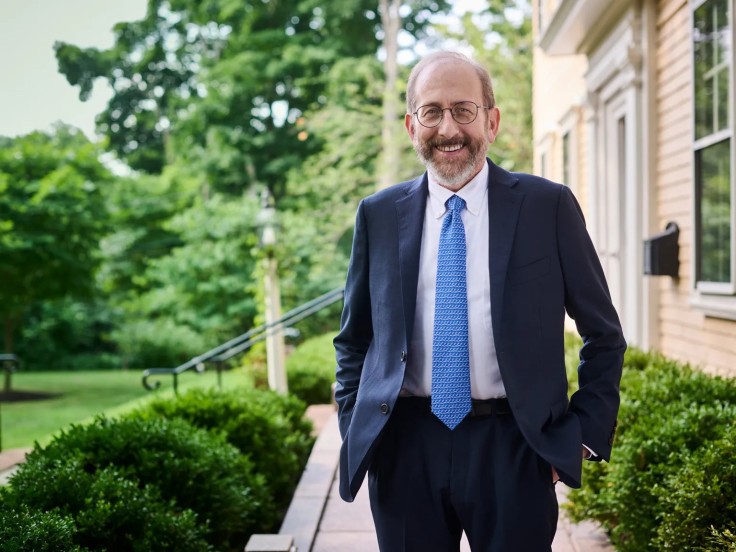
Harvard University President Alan Garber has taken an unusual step by publicly addressing what he describes as a problematic shift toward faculty activism in classrooms, saying the university is now working to restore balance and objectivity to teaching.
In a December 16 appearance on the "Identity/Crisis Podcast" hosted by the Shalom Hartman Institute, Garber acknowledged that political expression by professors has created an environment where students feel unable to speak freely or challenge viewpoints.
Students Afraid to Challenge Professors
"That's what had shifted, and that's where I think we went wrong," Garber stated during the podcast interview with host Yehuda Kurtzer. "Because think about it, if a professor in a classroom says, this is what I believe about this issue, how many students — some of you probably would be prepared to deal with this, but most people wouldn't — how many students would actually be willing to go toe to toe against a professor who's expressed a firm view about a controversial issue?"
The Harvard president expressed satisfaction that the university is now taking steps to address the imbalance. "I'm pleased to say that I think there's real movement to restore balance in teaching and to bring back the idea that you really need to be objective in the classroom," he said.
Generational Shift in Academic Culture
Garber explained that during his own college years, ideological freedom and open expression were fundamental principles of higher education. However, he noted that as younger faculty members have been hired over time, this foundational concept has eroded.
The president emphasized that universities should focus on equipping students with analytical tools and facts rather than promoting particular political positions. "What we need to arm our students with is a set of facts and a set of analytic tools and cultivation of rigor in analyzing these issues," he explained.
Teaching Facts, Not Activism
"It is not about how to sling slogans or how to advance a particular political perspective," Garber continued. "People will do that, and we want to make sure that the education that we give them will enable them to do that with some real authority. But we're not about the activism. We're not about pushing particular points of view."
He stressed that Harvard's approach should be grounded in logic and evidence. "Other than that, you should be logical, firmly grounded in the evidence and rigorous in how you approach these issues."
Free Speech Essential to Excellence
Garber argued that Harvard's mission centers on excellence in teaching, learning, and research, which requires open communication. "We have to be capable of speaking with one another, freely hearing one another, risking being rejected or saying something offensive, if that's necessary, to be able to have effective communication," he said.
Ongoing Controversies at Harvard
The comments come as Harvard navigates multiple controversies related to campus culture and free speech. In 2025, the university found itself embroiled in debates over radical activism and antisemitism on campus.
Fox News Digital previously exposed a 2018 panel where Harvard faculty members praised an Antifa activist and professor who advocated for potential political violence. Video of the panel, which had been available on YouTube for seven years, was subsequently removed following the report.
Harvard is also locked in a legal battle with the Trump administration over allegations of antisemitism on campus. The administration initially pulled $2.7 billion in federal funding, prompting Harvard to file a lawsuit. A federal court ordered the funds restored, but the administration appealed the decision in December.
Professor's Scathing Critique
Adding to the scrutiny, a professor who taught at Harvard for 40 years recently published a damning assessment of the institution. James Hankins wrote in Compact Magazine about ideological homogeneity and alleged discrimination in graduate admissions.
"In reviewing graduate student applicants in the fall of 2020 I came across an outstanding prospect who was a perfect fit for our program," Hankins wrote. "In past years this candidate would have risen immediately to the top of the applicant pool. In 2021, however, I was told informally by a member of the admissions committee that 'that' (meaning admitting a white male) was 'not happening this year.'"
Hankins also criticized the elimination of Western civilization courses and what he described as a broader trend away from traditional academic values.
Harvard University did not respond to requests for comment on Garber's podcast remarks or the broader controversies surrounding campus culture.
© 2026 University Herald, All rights reserved. Do not reproduce without permission.


