The Department of Education Is Leaving Its Headquarters. What That Means — and What It Doesn’t
The LBJ Building Is 70% Empty After a 50% Staff Reduction. The $4.8 Million Annual Savings Is Real. But the Symbolism Is the Point.
By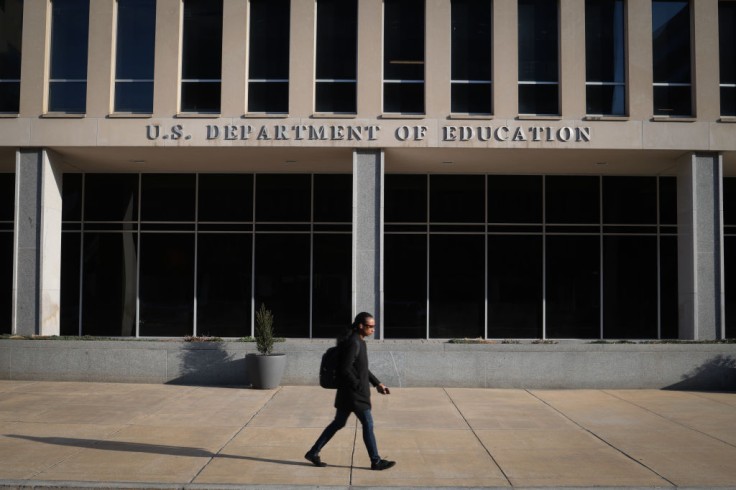
The U.S. Department of Education announced Wednesday that it will vacate its longtime Washington, D.C. headquarters — the Lyndon B. Johnson building — and relocate to a smaller federal office building approximately one block away, saving an estimated $4.8 million annually in rental costs. The Department of Energy will move into the LBJ building in exchange, avoiding more than $350 million in deferred maintenance costs on its current building.
The targeted move date is August 2026.
The practical case for the move is straightforward: the Department of Education's own fact sheet acknowledges that roughly 70% of the LBJ building is currently not being utilized, following a reduction in force last year that cut nearly 50% of the department's workforce. Moving a half-sized agency into a smaller building is a reasonable facilities decision. The $4.8 million in annual savings is real.
But the Trump administration's framing of the announcement makes clear that the savings are not the primary message.
The Symbolism the Administration Is Emphasizing
"One year ago, President Trump signed one of the most consequential executive orders of his presidency — to break up the federal education bureaucracy and return education to the states," said Secretary of Education Linda McMahon in announcing the move. "Thanks to the hard work of so many, we have made unprecedented progress in reducing the federal education footprint, and now we are pleased to give this building to an agency that will benefit far more from its space than the Department of Education."
The reference to "an agency that will benefit far more" — meaning the Department of Energy, which deals in nuclear weapons, power grids, and scientific research — is a pointed one. The administration is framing the vacating of the LBJ building not merely as a facilities optimization but as a demonstration that the Department of Education has been sufficiently downsized that it no longer warrants its own headquarters.
That framing is consistent with a year-long campaign to reduce the department's scope and, ultimately, eliminate it as a cabinet-level agency. The Trump administration's executive order directing the "return of education to the states" was signed one year ago. Congress has not acted to formally abolish the department — which would require legislation — but the administration has pursued structural reduction through workforce cuts, grant terminations, and now the high-visibility surrender of the department's signature building.
What Has Actually Changed at the Department
The fact sheet accompanying Wednesday's announcement states that the Department of Education "has spent more than $3 trillion on the federal education bureaucracy since 1980 — with dismal results." It credits the Trump administration with securing "the largest national education freedom expansion in history" and "empowering state education leaders with the flexibility to innovate."
What has concretely changed in the past year: a reduction in force cutting nearly 50% of the department's workforce, the termination of billions of dollars in research grants at universities across the country, the elimination of offices overseeing diversity and equity programs, the suspension of student loan forgiveness programs, and the withdrawal of federal civil rights guidance in several areas. The department has also initiated or supported investigations into dozens of universities over antisemitism, DEI policies, and admissions practices.
What has not changed: the Department of Education remains a cabinet-level agency. The programs it administers — Title I funding for low-income schools, IDEA funding for students with disabilities, Federal Student Aid, Pell Grants, and civil rights enforcement — continue to operate. The new address will be 500 D Street SW, approximately one block from the LBJ building.
The LBJ Building's History — and What Its Loss Means
The Lyndon B. Johnson Department of Education Building at 400 Maryland Avenue SW was named for the president who signed the Elementary and Secondary Education Act of 1965 — the foundational legislation establishing the federal role in K-12 education — and who championed the creation of a cabinet-level education department as part of his Great Society agenda. The Department of Education as a standalone cabinet agency was formally established in 1979 under President Carter.
Handing the LBJ building to the Department of Energy carries unmistakable symbolic weight in that context. The administration is not merely saving money on rent. It is making a visible argument — in real estate — about which federal functions deserve a prominent headquarters and which do not.
For the education community — teachers, school administrators, university financial aid officers, student loan borrowers, and the civil rights advocates who have relied on the department's enforcement offices — the move will land differently than the administration intends. The building bears the name of a president who believed that federal investment in education was an act of national faith. Vacating it is a statement of a different kind.
What It Means for Students and Institutions
The move itself will not disrupt any federal services, according to the fact sheet. The transition will occur in phases specifically designed to avoid interruption of work activities. Staff currently working from the LBJ building will receive detailed updates from their managers in the coming weeks.
For students applying for financial aid, borrowers managing federal student loans, schools receiving Title I funds, or universities navigating federal investigations, the change of address is not operationally significant. The programs will continue to be administered — by a smaller workforce, from a smaller building, under a department whose leadership has made clear it views its own existence as a transitional phase rather than a permanent fixture.
Whether Congress ultimately acts to abolish the department, merge its functions into other agencies, or simply allow the current administration to hollow it out through attrition and budget cuts without formal legislation will determine whether August 2026 marks the beginning of the end of the Department of Education as Americans have known it — or simply the day it moved one block down the street.
© 2026 University Herald, All rights reserved. Do not reproduce without permission.


