Universities Hid $2 Billion in Foreign Funding Until They Got Caught—Now 4 Face Federal Investigation
Between February and December 2025, American universities reported over $2 billion in foreign funding late—in direct violation of federal law. Four elite institutions are now under investigation for inaccurate disclosures. What else are they hiding?
By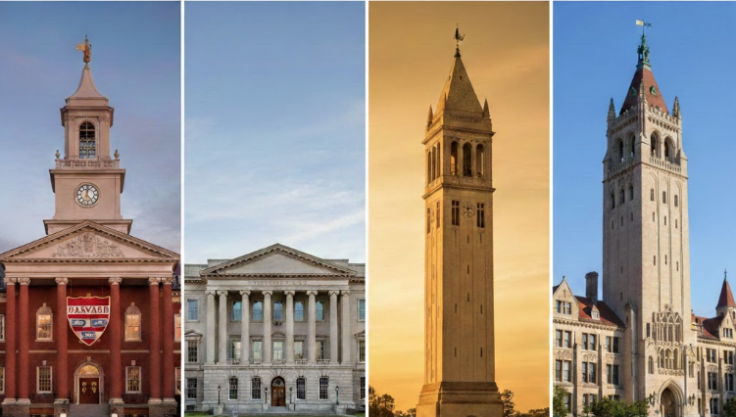
Federal law is clear: Universities receiving federal financial assistance must disclose foreign gifts and contracts over $250,000. The disclosures must be timely, accurate, and complete.
Between February 28, 2025, and December 16, 2025, American universities violated this law more than $2 billion worth.
Over $2 billion in foreign funding came in late—disclosed only after deadlines had passed, after scrutiny had faded, after the public's attention had moved on. Universities reported billions in foreign gifts and contracts outside the legal timeframes, burying the information when they thought nobody was watching.
Then someone started watching.
The Trump administration launched a new foreign funding transparency portal in January 2026, upgraded reporting requirements, and began scrutinizing decades of university disclosures. What they found triggered four federal investigations into Harvard University, the University of Pennsylvania, the University of California Berkeley, and the University of Michigan for "inaccurate and untimely foreign source gift and contract disclosures."
The message is clear: Universities broke the law. They got caught. And now they face consequences that could devastate their finances and destroy their access to federal student aid.
The question is: What else haven't they disclosed? If universities will hide $2 billion in late reporting, what foreign funding still hasn't been reported at all?
The Law They Broke
Before examining what universities did wrong, it's important to understand what the law requires.
Section 117 of the Higher Education Act (20 U.S.C. § 1011f) is straightforward: Institutions of higher education must disclose foreign source gifts and contracts with values of $250,000 or more annually to the Department of Education.
The requirements are specific:
Who must report: Any institution receiving federal financial assistance—which includes virtually every American college and university through Title IV student aid programs.
What must be reported: Foreign gifts and contracts valued at $250,000 or more, including the source, amount, and date.
When it must be reported: Within specified timeframes—institutions must file reports twice annually covering six-month periods.
How it must be reported: Through the Department of Education's designated reporting system, now the new foreignfundinghighered.gov portal.
Consequences of non-compliance:
- Civil enforcement actions by the Department of Justice
- Recoupment of full enforcement costs from the institution
- Loss of eligibility for Title IV federal student aid programs
That last penalty is potentially catastrophic. Title IV programs include Pell Grants, federal student loans, and work-study funding. Losing eligibility would make universities unaffordable for most students, devastate enrollment, and destroy institutional finances.
The law isn't ambiguous. Universities know exactly what they're required to report and when. Section 117 has existed since 1986—institutions have had nearly four decades to develop compliance systems.
Yet between February and December 2025, universities reported over $2 billion in foreign funding late, in direct violation of these clear requirements.
The $2 Billion That Came Late
Two billion dollars. That's not a rounding error. That's not a handful of missed transactions. That's systematic failure to comply with federal disclosure requirements.
The late reporting occurred between February 28, 2025, and December 16, 2025—a period when universities should have been filing regular six-month disclosures. Instead, billions in foreign funding were disclosed late, after the legal deadlines had passed.
The Department of Education's February 11, 2026 announcement was explicit: "Additionally, between February 28, 2025, and December 16, 2025, more than $2 billion in reportable gifts and contracts were reported late, in direct violation of statutory requirements."
More than $2 billion. In direct violation of statutory requirements.
Think about what this means:
Hiding in plain sight: Late reporting isn't the same as not reporting at all. Universities eventually disclosed the funding—but only after deadlines when disclosure would have triggered real-time scrutiny.
Strategic delay: Reporting foreign funding late means the information becomes public after media attention has moved on, after congressional oversight cycles have passed, after public pressure can be applied.
Pattern, not accident: $2 billion in late reporting across many institutions suggests systematic problems with university compliance systems—or deliberate strategies to avoid timely transparency.
Legal violations: Every late report represents a violation of Section 117. With $2 billion in late reporting, that's thousands of individual violations across potentially dozens or hundreds of institutions.
What's still missing: If universities will report $2 billion late, how much foreign funding still hasn't been reported at all?
The late reporting creates an obvious question: Were universities unable to track and report foreign funding in compliance with federal law? Or were they unwilling?
The Four Under Investigation
The Department of Education didn't just notice the $2 billion in late reporting and move on. The agency launched federal investigations into four major universities for compliance failures.
The institutions under investigation are:
Harvard University - The nation's wealthiest university, with a $50+ billion endowment. Harvard has disclosed receiving over $610 million from "countries of concern" since 1986—more than any other American institution. The investigation focuses on inaccurate and untimely foreign funding disclosures.
University of Pennsylvania - An Ivy League institution that has faced previous scrutiny over foreign funding relationships. Now under investigation for inaccurate and untimely disclosures of foreign gifts and contracts.
University of California, Berkeley - A flagship public research university conducting cutting-edge research in fields including AI, quantum computing, and advanced materials—areas of high interest to foreign entities. Under investigation for disclosure violations.
University of Michigan - Another major public research university with extensive international collaborations. Facing investigation for inaccurate and untimely foreign funding reporting.
These aren't small regional colleges struggling with compliance. They're elite research universities with:
- Sophisticated administrative systems
- Extensive legal departments
- Decades of experience with federal reporting requirements
- Billions in endowments and annual budgets
- Strong incentives to maintain federal funding eligibility
If these institutions can't—or won't—comply with Section 117 disclosure requirements, what does that say about university commitment to transparency?
The investigations were announced publicly but details remain limited. The Department of Education hasn't disclosed:
- Specific amounts of unreported or misreported funding
- Which countries or entities were involved in undisclosed funding
- Whether violations were deliberate or negligent
- What penalties the universities might face
- How long investigations will take
What we know is sufficient to be troubling: Four elite universities are under federal investigation for violating foreign funding disclosure laws. The violations involved inaccurate and untimely reporting. And this is happening in the context of $2 billion in late reporting across the entire higher education sector.
Harvard: The Most From "Countries of Concern"
Harvard's investigation is particularly significant given the university's documented foreign funding relationships.
Since 1986, Harvard has disclosed receiving over $610 million from "countries of concern"—entities the federal government identifies as threatening national security. That's more than any other American institution.
In 2025 alone, Harvard received over $324 million in total foreign funding from all sources.
But Harvard is now under investigation for "inaccurate and untimely foreign source gift and contract disclosures." That means:
Inaccurate: Harvard may have misreported amounts, sources, dates, or purposes of foreign funding. Inaccurate disclosures could mean underreporting funding amounts, misidentifying sources, or providing misleading information.
Untimely: Harvard reported some foreign funding late, outside the legal deadlines for Section 117 compliance.
The combination is damning. If Harvard's disclosed $610 million from countries of concern is based on inaccurate reporting, the actual total could be significantly higher. And if Harvard reported funding late, it deliberately avoided real-time transparency about foreign relationships.
Harvard has faced previous foreign funding controversies:
Charles Lieber case: Harvard chemistry professor Charles Lieber was convicted in 2021 for lying about participation in China's Thousand Talents Plan and receiving payments from Chinese sources that weren't properly disclosed.
Undisclosed contracts: Federal investigations previously found Harvard failed to disclose certain contracts and gifts from Chinese sources.
Research partnerships: Harvard maintains extensive international collaborations, some with entities in countries of concern.
The current investigation will determine whether Harvard's disclosure problems are ongoing, systematic, and more extensive than previously known.
Penn: Following the Money
The University of Pennsylvania's investigation comes at a sensitive time for the institution.
Penn has faced recent scrutiny over its handling of various controversies, including donor relationships, campus speech issues, and leadership decisions. Now federal investigators are examining whether Penn accurately and timely reported foreign funding.
What makes Penn's investigation particularly interesting: The university operates the Penn Biden Center for Diplomacy and Global Engagement in Washington, D.C.—a center that has received substantial attention for its connections to President Biden before his 2020 campaign.
Penn also maintains extensive international partnerships, particularly in China. The university has research collaborations, student exchanges, and institutional relationships across countries that fall under "countries of concern" designations.
If Penn's investigation reveals systematic underreporting or misreporting of foreign funding, it would validate concerns that universities' stated commitment to transparency doesn't match their actual disclosure practices.
Berkeley: The Public University Test Case
UC Berkeley's investigation represents a crucial test case because it's a public institution, not a private university like Harvard or Penn.
As a public university, Berkeley faces different accountability mechanisms than private institutions:
State oversight: California taxpayers fund UC Berkeley through state appropriations. Foreign funding disclosure failures affect public trust in how the institution operates.
Public records: As a public entity, Berkeley faces California's Public Records Act requirements, which should make foreign funding relationships more transparent than at private universities.
Political accountability: Berkeley's leadership ultimately answers to the UC Board of Regents and California's political leadership, creating additional oversight channels.
Yet despite these additional transparency mechanisms, Berkeley is under investigation for foreign funding disclosure violations.
Berkeley conducts enormous amounts of research in fields with national security implications: artificial intelligence, quantum computing, advanced materials, robotics, cybersecurity, and biotechnology. Foreign entities have strong interests in accessing Berkeley research in these areas.
The university also enrolls thousands of international students, including substantial numbers from countries of concern. And Berkeley has maintained research partnerships with Chinese institutions despite increasing scrutiny of such relationships.
If a public university with state oversight and public records requirements can't properly disclose foreign funding, what confidence should we have in disclosure compliance across higher education?
Michigan: The Pattern Expands
The University of Michigan's investigation suggests the compliance problems aren't limited to Ivy League schools or California public universities.
Michigan is a major Midwest research university with extensive international connections:
Research scale: Michigan conducts billions in research annually across numerous fields, much of it federally funded and some in sensitive areas.
International enrollment: Michigan enrolls significant numbers of international students from countries worldwide, including countries of concern.
Global partnerships: The university maintains research collaborations, institutional partnerships, and academic exchanges with entities in dozens of countries.
Prior concerns: Michigan previously hosted a Confucius Institute until 2019, when it was closed following federal pressure and concerns about Chinese government influence on campus.
Michigan's inclusion in the investigations indicates that foreign funding disclosure problems span different types of institutions in different regions—suggesting systemic issues rather than isolated failures at a few universities.
What "Inaccurate and Untimely" Really Means
The Department of Education's description of the investigations uses specific language: "inaccurate and untimely foreign source gift and contract disclosures."
Inaccurate disclosures could mean:
- Underreporting amounts: Disclosing $1 million when the actual amount was $2 million
- Misidentifying sources: Reporting funding as coming from one entity when it actually came from another
- Omitting transactions: Not reporting foreign gifts or contracts that exceeded the $250,000 threshold
- Incorrect dates: Misreporting when funding was received, potentially shifting it to different reporting periods
- Misleading purposes: Describing funding purposes in ways that obscure actual uses or intentions
- Aggregation failures: Not properly combining related transactions from the same source
Untimely disclosuresmeans:
- Late reporting: Filing required disclosures after legal deadlines
- Strategic delay: Waiting until scrutiny fades before disclosing controversial foreign funding
- Systematic lateness: Patterns of late reporting suggesting deliberate avoidance of timely transparency
- Multi-year delays: In some cases, foreign funding from years ago only being disclosed recently
The combination of "inaccurate and untimely" is particularly damning. It suggests universities both misreported foreign funding AND did so late—compounding the transparency failures.
The Enforcement Gap That Allowed This
How did $2 billion in foreign funding get reported late without triggering immediate consequences?
The answer reveals an enforcement gap that has existed for decades:
Limited oversight: Until the Trump administration's recent focus on Section 117 enforcement, the Department of Education conducted minimal active oversight of university foreign funding disclosures.
No real-time verification: The department historically accepted whatever universities reported without systematic verification against other data sources or real-time monitoring.
Reactive rather than proactive: Enforcement actions typically occurred only after whistleblowers, media reports, or congressional inquiries flagged specific problems—not through routine compliance audits.
Minimal penalties: Even when violations were discovered, penalties were often minor or non-existent, creating no deterrent against future non-compliance.
Voluntary compliance model: Section 117 largely operated on an honor system, trusting universities to self-report foreign funding accurately and timely.
This enforcement gap created an environment where universities could delay reporting, misreport amounts, omit transactions, or otherwise fail to comply with disclosure requirements without facing meaningful consequences.
The Trump administration's approach represents a significant shift:
New transparency portal: The foreignfundinghighered.gov portal makes disclosures public and searchable, increasing scrutiny.
Upgraded data: The portal includes 11 additional data elements—a 61% increase in publicly available information—making patterns easier to identify.
Proactive investigations: The Department of Education initiated four investigations based on review of disclosure data, not just responding to external complaints.
Public accountability: High-profile announcements of investigations and late reporting statistics create reputational pressure on universities.
Enforcement credibility: The threat of losing Title IV eligibility is now more credible, given the administration's demonstrated willingness to investigate major universities.
Education Secretary Linda McMahon specifically criticized "years of neglect by the Biden Administration, which failed to effectively enforce Section 117 and shuttered public-facing accountability instruments."
Whether this enforcement shift continues under future administrations remains to be seen. But for now, universities face a level of foreign funding scrutiny they haven't experienced in years—and the $2 billion in late reporting suggests they weren't prepared for it.
The Questions Late Reporting Raises
The $2 billion in late reporting creates troubling questions that go beyond the specific dollar amount:
What motivated late reporting? Were universities simply unable to track and report foreign funding in compliance with federal law? Or did they deliberately delay reporting to avoid real-time scrutiny?
How much is still unreported? If universities will report $2 billion late, how much foreign funding still hasn't been reported at all? Late reporting suggests the disclosed totals understate actual foreign funding.
Which countries were delayed? Was the $2 billion in late reporting evenly distributed across all foreign sources, or were certain countries' funding more likely to be reported late? Late reporting of funding from countries of concern would be particularly problematic.
Were students informed? When universities accept foreign funding that creates institutional relationships, do students know about these relationships? Late reporting means students couldn't have known in real time.
What about faculty? Were faculty aware of foreign funding relationships at their institutions? Late reporting prevented faculty from weighing in on whether to accept controversial funding.
Did Congress know? Congressional oversight of foreign influence in higher education depends on timely disclosure. Late reporting undermines legislative oversight.
What triggered compliance? Why did universities eventually report the funding? Was it because the new portal increased scrutiny? Fear of getting caught? Routine late filing that they thought nobody would notice?
Are patterns visible? With multiple years of data now public, can researchers identify which institutions systematically report late? Which countries' funding is most often reported late?
These questions won't be answered quickly. But they're the right questions to ask when universities collectively report $2 billion in foreign funding late in direct violation of federal law.
The Title IV Nuclear Option
The most serious potential consequence of Section 117 violations is loss of eligibility for Title IV federal student aid programs.
This penalty would be absolutely devastating for most universities:
Financial collapse: Title IV programs include Pell Grants, federal student loans, and work-study funding. Most students rely on some combination of these programs. Without federal aid, most students couldn't afford to attend.
Enrollment implosion: If students can't get federal aid to attend a university, they'll go elsewhere. Enrollment would collapse almost immediately.
Revenue devastation: Universities depend heavily on tuition revenue. Losing most students would create catastrophic budget holes.
Competitive disadvantage: A university that loses Title IV eligibility while competitors maintain it essentially becomes uncompetitive in student recruitment.
Reputation destruction: Losing federal aid eligibility would signal that a university is so non-compliant with federal law that it can't be trusted with taxpayer money.
The Department of Education has never actually revoked a major university's Title IV eligibility for Section 117 violations. The penalty exists in statute but hasn't been used.
That's why it's called the "nuclear option"—it's so destructive that using it would devastate the institution, but the threat of using it creates powerful incentive for compliance.
Will the Trump administration actually use this penalty? The four ongoing investigations will provide the answer. If violations are severe enough and universities don't take meaningful corrective action, the administration might follow through on the threat.
Even if Title IV eligibility isn't revoked, other penalties could include:
- Fines and civil penalties: Financial penalties for each violation, potentially totaling millions
- Enhanced monitoring: Increased Department of Education oversight, required compliance plans, and regular reporting beyond standard requirements
- Public disclosure: Detailed public reports on violations, creating reputational damage
- Conditional eligibility: Maintaining Title IV eligibility but with conditions that create administrative burden and uncertainty
Any of these penalties would be significant. But the Title IV nuclear option remains the most powerful deterrent—and potentially the most devastating consequence.
What Universities Should Have Done
Section 117 compliance isn't complicated. Universities with sophisticated administrative systems should easily be able to:
Track foreign funding: Maintain comprehensive databases of all foreign gifts and contracts, including source, amount, date, and purpose.
Identify reportable transactions: Flag all foreign funding over $250,000 for disclosure review.
Report on schedule: File required disclosures twice annually covering six-month periods, meeting all deadlines.
Verify accuracy: Cross-check disclosures against financial records to ensure amounts and sources are correctly reported.
Maintain documentation: Keep records supporting all disclosures in case of audits or investigations.
Train staff: Ensure development offices, research administration, international programs, and other units receiving foreign funding understand reporting requirements.
Centralize oversight: Designate compliance officers responsible for ensuring complete and accurate Section 117 reporting.
Review regularly: Conduct internal audits to catch unreported or misreported funding before federal investigators do.
These aren't exotic requirements. They're basic compliance practices that universities implement for dozens of other federal regulations.
Yet somehow, universities managed to report $2 billion in foreign funding late. Four elite institutions are under investigation for inaccurate and untimely disclosures. And the pattern suggests compliance problems are widespread.
Either universities lack the capacity to comply with Section 117—which seems implausible given their administrative sophistication. Or they lack the will to comply—which is damning.
The Biden vs. Trump Enforcement Contrast
The $2 billion in late reporting and four investigations emerged after the Trump administration made foreign funding transparency a priority.
Education Secretary Linda McMahon explicitly criticized the Biden administration's approach: "years of neglect...which failed to effectively enforce Section 117 and shuttered public-facing accountability instruments."
The criticism is substantiated by the evidence:
Biden administration: Section 117 enforcement was relatively passive. The public-facing portal that made disclosures easily searchable was not maintained. Few investigations were initiated. Universities faced minimal scrutiny for late or incomplete reporting.
Trump administration: Launched new foreignfundinghighered.gov portal with enhanced data and visualization capabilities. Initiated four major investigations within the first year. Publicly highlighted $2 billion in late reporting. Made foreign funding transparency a priority issue.
This enforcement contrast has political implications:
For universities: The level of scrutiny they face depends significantly on which administration is in power, creating regulatory uncertainty.
For foreign funders: Countries and entities considering funding American universities must factor in changing enforcement climates.
For compliance: Universities that were comfortable with minimal enforcement under Biden now face enhanced scrutiny under Trump, catching some unprepared.
For future policy: The enforcement shift demonstrates that Section 117's effectiveness depends less on the statute itself than on executive branch commitment to enforcement.
Whether future administrations maintain Trump-level enforcement or revert to Biden-level passivity will significantly impact how much foreign funding remains hidden.
What Comes Next
The $2 billion in late reporting and four ongoing investigations are just the beginning.
Several developments are likely:
Investigation results: The Harvard, Penn, Berkeley, and Michigan investigations will eventually conclude, revealing what violations occurred and what penalties are imposed.
More investigations: If initial investigations find serious violations, the Department of Education may expand audits to other universities.
Congressional action: The data on late reporting and disclosure violations provides ammunition for congressional hearings and potentially new legislation.
Litigation: Universities facing penalties may challenge enforcement actions in court, creating legal precedents about Section 117's scope and enforcement.
Policy changes: The Department of Education may implement new requirements, more frequent reporting, or enhanced verification procedures.
University responses: Institutions will likely enhance compliance systems, hire additional staff, and implement new oversight procedures to avoid becoming the next investigation target.
Whistleblowers: Faculty, staff, or students aware of unreported foreign funding may come forward, triggering additional investigations.
Media scrutiny: Increased public awareness of foreign funding issues will fuel more investigative journalism into university relationships.
The $2 billion in late reporting revealed a massive compliance problem. The four investigations signal that consequences are coming. And the new transparency portal ensures that future violations will be harder to hide.
The Trust Problem
At its core, the $2 billion in late reporting represents a trust problem.
Section 117 operates on trust: Universities are trusted to accurately and timely report foreign funding because the Department of Education can't independently verify every transaction in real time.
Universities betrayed that trust. They reported $2 billion late. Four are under investigation for inaccurate disclosures. And the pattern suggests compliance problems are systematic rather than isolated.
This creates a fundamental question: Can American universities be trusted to accurately disclose foreign funding when transparency works against their interests?
The evidence suggests: No.
When foreign funding brings scrutiny, controversy, or pressure to reject money, universities have demonstrated they'll delay reporting, misreport amounts, or otherwise fail to comply with disclosure requirements.
The $2 billion in late reporting isn't a compliance failure. It's a trust failure.
And trust, once broken, is difficult to rebuild.
The Bottom Line
Between February and December 2025, American universities reported over $2 billion in foreign funding late, in direct violation of federal disclosure requirements.
Four elite institutions—Harvard, Penn, Berkeley, and Michigan—are under federal investigation for inaccurate and untimely foreign funding disclosures.
Universities face potential penalties ranging from fines to the nuclear option: loss of eligibility for Title IV federal student aid.
The late reporting reveals systematic compliance problems across higher education. And it raises an obvious question: If universities will hide $2 billion by reporting it late, how much foreign funding still hasn't been disclosed at all?
The Trump administration's new transparency portal and aggressive enforcement approach have exposed what years of passive oversight allowed to remain hidden.
Universities broke the law. They got caught. And the $2 billion in late reporting is just what we know about.
What we don't know—what's still unreported, what's still being hidden, what foreign funding relationships remain undisclosed—could be even more troubling.
The investigations will tell us more. But we already know enough: When universities report $2 billion in foreign funding late in violation of federal law, they're not just breaking disclosure requirements.
They're demonstrating that transparency only happens when they're forced to provide it.
The Department of Education's investigations into Harvard, Penn, Berkeley, and Michigan are ongoing. The universities have not publicly commented on specific allegations or findings. Additional disclosures covering the period through January 31, 2026, are expected by February 28, 2026.
© 2026 University Herald, All rights reserved. Do not reproduce without permission.


