America’s Only HBCU System Is Asking Louisiana’s Legislature for More Than Money — It Needs a Reckoning
As the 2026 Session Opens, the Southern University System Faces a $33 Million Budget Decrease, a $1 Billion Funding Disparity With LSU, New Hazing Legislation, a DEI Investigation, and a Presidential Vacancy — All at Once
By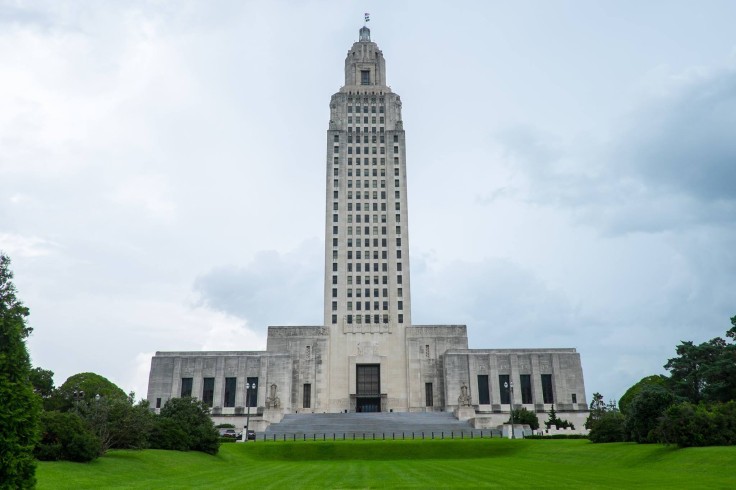
The Louisiana Legislature's 2026 regular session opened March 9 with the Southern University System — the nation's only system of Historically Black Colleges and Universities — sitting at the intersection of nearly every major challenge facing American higher education simultaneously: chronic underfunding, declining revenue, a governance vacancy, federal DEI scrutiny, hazing legislation born from student deaths, and a broader statewide debate about whether Louisiana simply has too many universities to sustain.
How the legislature responds to what the Southern University System is asking for this session will say something significant about Louisiana's commitment to the institutions it created to educate Black citizens — and about whether a century-old funding gap can finally begin to close.
The Budget Reality: A $33 Million Decrease
Under Governor Jeff Landry's proposed budget for fiscal year 2026-27, the Southern University System would see an overall budget decrease of approximately $33 million compared to the current year — driven primarily by decreased tuition and fee revenue as well as a small dip in state appropriations. This stands in stark contrast to the LSU System, which would see a budget increase of about $46 million driven by record enrollments and self-generated revenue, and the University of Louisiana System, which would see a $14 million increase.
The disparity is not new, but it is sharpening. Southern's appropriated funds for fiscal year 2025-26 were already $191.9 million — a figure that is $22.9 million less than what had been appropriated the prior year, according to the system's own budget narrative.
Meanwhile, the Louisiana Board of Regents has told the legislature that the state's current higher education budget is $869 million short of what it considers full funding — and has requested $119 million in additional state general fund money for fiscal year 2026-27. Commissioner of Higher Education Kim Hunter Reed called the circumstances a "perfect storm" for many schools and warned that if the legislature does not award the requested funds, some universities may have to severely curb their offerings. "It will be extremely tight," she said.
The $1 Billion Land-Grant Disparity
Beneath the immediate budget numbers lies a structural inequity that has persisted for over a century. The Biden administration's 2023 joint letter from the secretaries of education and agriculture found that Louisiana had funded Southern University more than $1 billion less than LSU over three decades — with states legally required to match federal land-grant funds dollar for dollar but routinely failing to do so for their 1890 institutions.
The Southern University System is the 1890 land-grant institution for Louisiana. LSU is the 1862 land-grant institution. Both are supposed to receive equivalent state matching support for federally funded agricultural research and extension programs. The gap between what they have actually received — more than $1 billion over 30 years — represents one of the most well-documented examples of racial inequity in public higher education funding in the American South.
Trump's executive order on HBCUs, signed last spring, committed to "encouraging states to provide the required state matching funds for 1890 Land-Grant Institutions." The recently signed USDA Memorandum of Understanding with the Council of 1890 University Presidents similarly emphasized closing state matching fund gaps as a priority. Whether that federal encouragement translates into legislative action in Baton Rouge this session is an open question.
Hazing Legislation and a Posthumous Degree
Among the most emotionally charged issues before the 2026 legislature is a package of anti-hazing bills born directly from student deaths within the Southern University System.
The Southern University System Board recently voted to confer posthumous degrees on two students who died last year — one of whom was Caleb Wilson, whose death catalyzed Louisiana lawmakers to take action. A task force named in Wilson's honor has recommended several legislative proposals for the 2026 session, including requiring annual anti-hazing training for all students and student organization advisers — including "external advisers" such as those working with Greek organizations who are not university employees — and adopting amnesty policies that would allow students to report hazing without fear of repercussions for other rule violations.
Last year, lawmakers passed Act 174 doubling the required hazing prevention training from one to two hours. The 2026 proposals go further, addressing the external adviser gap and the chilling effect that fear of punishment has historically had on hazing reporting.
The Southern University System, which has one of the most storied Greek life traditions in HBCU culture, faces the delicate task of supporting legislation that will reform the very organizations that give its campuses much of their identity — while honoring the students whose deaths made that reform unavoidable.
The DEI Investigation
The Southern University System is also navigating a federal DEI investigation that has broader implications for all of Louisiana's public universities.
Governor Landry formally requested in February that the U.S. Department of Education's Office for Civil Rights expand its existing inquiry into the Louisiana Board of Regents' 2019 strategic plan — which included an objective to increase the number of Black and Hispanic students receiving degrees — to cover every public higher education institution in Louisiana.
The Southern University System, made up entirely of HBCUs, has received particular legislative attention for its low graduation rates and is a named focus of the Board of Regents' student attainment goals. The irony of a federal civil rights investigation targeting programs designed to improve educational outcomes for Black students — at institutions that were themselves created because Black students were excluded from white universities — has not been lost on higher education advocates.
"The plan does not contain any prohibited DEI preferences, but instead reflects the Regents' goal to improve the educational attainment levels of ALL Louisiana citizens," the Board of Regents' staff wrote in response to legislative questions.
The Presidential Vacancy and HBCU Day at the Capitol
The Southern University System is also conducting a presidential search after its previous leader departed. The Board of Supervisors named a presidential search committee in January and the search is ongoing — a leadership vacuum that complicates the system's ability to advocate forcefully for itself during a critical legislative session.
On March 17, the Louisiana Senate adopted SR 21, formally recognizing the day as HBCU Day at the Capitol — a symbolic gesture that took place as Southern University students, faculty, alumni, and staff made their annual appearance at the Statehouse to press for the system's legislative priorities.
The Broader Question Louisiana Must Answer
The Southern University System's challenges in the 2026 session are, at their root, a single question that Louisiana has avoided answering for more than a century: does the state believe that the institutions it created to educate Black Louisianans deserve the same investment as the institutions it created for everyone else?
As LSU System President Wade Rousse acknowledged publicly in February, looking at the per-pupil metrics across Louisiana's university landscape, "It's hard to understand how it all works and how it's sustainable." That sustainability question applies across all Louisiana's systems — but it falls hardest on the system with the oldest funding deficit, the most political vulnerability, and the deepest institutional roots in the story of Black education in the American South.
The legislature's response to what Southern is asking for this session will be one measure of whether that question is finally getting a serious answer.
© 2026 University Herald, All rights reserved. Do not reproduce without permission.


