Leicester Murder Suspect: 18-Year-Old Arrested After Fatal Stabbing at De Montfort University
18-year-old suspect arrested and in police custody
By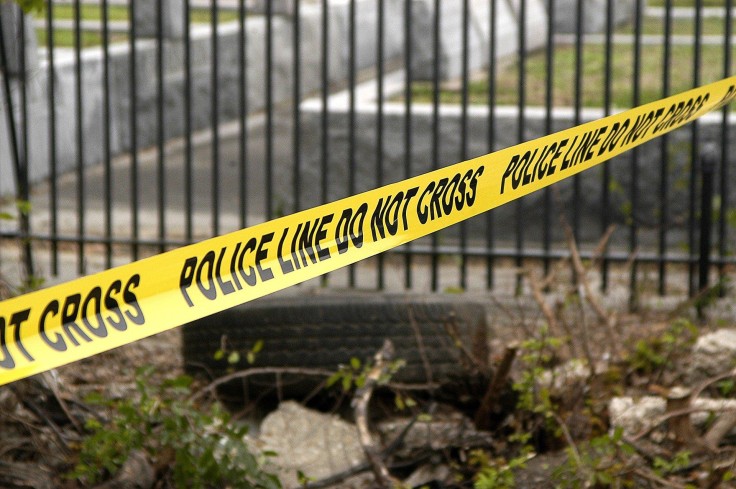
The first sign something was wrong wasn't the sirens. It was the sudden stillness on Oxford Street—students slowing, commuters stopping, a knot of people forming in that awkward, half-curious, half-frightened way crowds do when they sense danger but don't yet understand it. By the time the blue lights arrived, a young man was already down.
He was a De Montfort University student, in his twenties, and he would not make it home.
An 18-year-old man has been arrested on suspicion of murder after the fatal stabbing near the university's campus in Leicester, in what police have called a 'very serious incident.' It happened just after 5pm on Tuesday, 3 February, in Oxford Street, close to the junction with Bonners Lane—an area busy enough at that hour to guarantee witnesses, and cruel enough to make them remember the details.
The suspect remains in custody as detectives work through CCTV, dashcam footage and statements from those who were there, BBC News reported. The university, shaken and publicly grieving, says it is supporting students, staff and the victim's family.
Leicester Murder Suspect Arrested As Police Piece Together The Altercation
Leicestershire Police say officers were called shortly after 5pm after reports a man had collapsed on Oxford Street. While police were en route, the report was updated: the man—described as being in his 20s—had been stabbed. He was taken to Leicester Royal Infirmary and died a short time later, police said.
Detective Inspector Lorna Granville, the senior investigating officer, said police were still establishing 'exactly what has occurred' at the corner of Oxford Street and Bonners Lane, adding that the incident is believed to have involved 'two men' in a confrontation.
'One of the men is believed to have been stabbed and has then collapsed in the street,' she said, noting that he died in hospital despite the efforts of medical staff.
If there is a grim familiarity here, it's in the way violence now intrudes on ordinary urban routines. This wasn't the dead of night, not an isolated lane; it was early evening, when people are clocking off, heading to the library, walking to buses, thinking about dinner. That is what makes it feel so raw—what cannot be ignored is how quickly public spaces can tip from mundane to catastrophic.
The investigation is being led by the East Midlands Special Operations Unit Major Crime Team, a sign of how seriously police are treating the case. The police cordon has remained in place while forensic and search specialists examine the area.
Leicester Murder Suspect Held As Campus Grieves And Witnesses Are Urged To Come Forward
Police have appealed for witnesses, including drivers who may have captured footage on dashcams as they passed through Oxford Street around 5pm. It's a practical request, but it also hints at the scale of the task: reconstructing a fast, violent incident from partial angles—CCTV from shops, traffic cameras, university systems, the memories of people who were simply walking past.
The Guardian reported that the victim was a student at De Montfort University, a fact confirmed by the university's vice-chancellor, Professor Katie Normington. 'We are heartbroken to confirm the unfortunate death of one of our students,' she said, adding that the university is offering direct support to those affected and is working with police. Those words—carefully chosen, understandably restrained—can only do so much.
A campus is a community, and when a student dies violently, the shock ripples out in strange ways: friends refreshing group chats for news, lecturers improvising pastoral care, strangers leaving flowers because they don't know what else to do.
For students, the questions arrive quickly and don't always have neat answers. How safe is the route back from the library? What about walking alone after dark? Why here, why now? Police will not—and should not—fill that vacuum with speculation, but universities inevitably feel pressure to be seen to act, even when the facts are still being established.
The broader national picture is not comforting either. Official government data on crime outcomes in England and Wales shows that while recorded offences and outcomes vary by category, 'violence against the person' cases can take time to reach charge or summons decisions, and the system's pace is often slow compared with the public's demand for resolution. That gap—between shock and closure—is where anxiety lives.
For now, the only honest stance is patience and precision. An 18-year-old is in custody on suspicion of murder. A student in his 20s is dead. The rest will be decided by evidence, not rumour—and by a city trying, quietly, to absorb something it never asked for.
Originally published on IBTimes UK
This article is copyrighted by IBTimes.co.uk, the business news leader


