The Research Danhao Wang Was Doing — and Why the U.S. Government Cares
A 30-year-old postdoc published a landmark paper in Nature on next-generation semiconductors. Months later, he was dead. To understand why federal agents came calling, you need to understand what he discovered.
By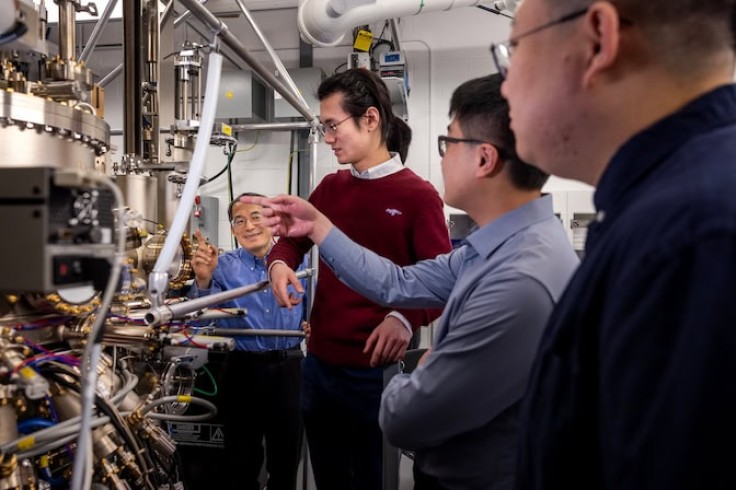
When University of Michigan engineering dean Karen Thole wrote to her faculty and students about the death of Danhao Wang on March 23, she did not reach for ordinary language. She called Wang "a promising and brilliant young mind" whose research "stands as a landmark, uncovering for the first time the switching and charge compensation mechanisms of emerging ferroelectric nitrides."
To most people, that sentence is opaque. To semiconductor researchers, defense planners, and anyone tracking the U.S.-China technology war, it describes something close to a breakthrough — work that sits squarely at the intersection of the most contested terrain in the global competition for technological supremacy.
Wang was 30 years old. He died on March 20, 2026, in what university police are investigating as a possible act of self-harm, shortly after speaking with federal investigators. China's Ministry of Foreign Affairs has since demanded a full U.S. investigation. The FBI has not commented. No charges were ever filed against Wang, and no public accusation was ever made about his research or conduct.
But to understand why federal agents may have found Wang's work interesting — and why that context matters — you have to understand what he actually built.
A Material That Wasn't Supposed to Work
Wang's most significant contribution was as co-first author on a landmark 2025 paper in Nature titled "Electric-field-induced domain walls in wurtzite ferroelectrics." The work solved a long-standing puzzle: why these ferroelectric nitrides remain stable despite extreme polarization discontinuities that should theoretically tear the crystal apart.
That sentence also needs unpacking. A ferroelectric material is one that can be electrically polarized — and, critically, that polarization can be reversed and will stay reversed even after you remove the electric field. Think of it like a magnet you can flip with electricity. The wurtzite ferroelectric nitrides were, as Wang's supervisor Prof. Zetian Mi explained, "recently discovered and have a broad range of applications in memory electronics, RF (radio frequency) electronics, acousto-electronics, microelectromechanical systems and quantum photonics."
The problem was that no one understood why these materials didn't simply break apart. When you flip the polarization, the material is divided into "domains" — regions pointing in opposite directions. Where two positively charged ends meet, the repulsion should, in theory, fracture the crystal. As Wang himself told Michigan Engineering: "In principle, the polarization discontinuity is not stable. Those interfaces have a unique atomic arrangement that has never been observed before."
What Wang and his team found, using transmission electron microscopy and advanced theoretical calculations, was that the break itself is the glue. At the junction between domains, the crystal fractures at the atomic scale, creating "dangling bonds" — atoms with unattached electrons. Those electrons do two things at once: they neutralize the electrical repulsion that would otherwise shatter the material, and they create something no one expected.
As Compound Semiconductor Magazine reported, those electrons create an adjustable superhighway for electricity along the joint, with about 100 times more charge-carriers than in a normal gallium nitride transistor — a highway that can be turned off and on, moved within the material, and made more or less conductive by adjusting the electric field.
A transistor you can tune by moving the conductive channel with an electric field. A material that stores information and conducts electricity at the same time. Wang and his colleagues recognized immediately what they had.
Why This Matters for AI, Defense, and the Tech War
The breakthrough has sweeping implications across several fronts: ferroelectric field-effect transistors could integrate non-volatile memory and logic in the same material, slashing energy use in AI chips, edge devices, and data centers. Domain-wall transistors promise superior performance in RF devices, power amplifiers, and next-generation power electronics. The materials also support brain-like synaptic behavior and energy-efficient non-volatile memory.
Those aren't abstract possibilities. They map directly onto the most contested areas of the semiconductor arms race between the United States and China.
Gallium nitride — the family of materials Wang was working within — is already central to military electronics. According to ORF America, GaN components are used in the U.S. Navy's AN/SPY-6 radar, the U.S. Marine Corps' AN/TPS-80 G/ATOR radar, as well as Patriot and THAAD missile defense systems. The scramble to develop next-generation variants of these materials is, in a real sense, a scramble for the future of air defense, radar, and high-frequency warfare.
China's growing dominance in gallium nitride semiconductor technology is giving it a strategic advantage that is reshaping the global arms race, according to a report by the Chinese Academy of Sciences' Institute of Physics. Meanwhile, as Asia Times reported, China controls 98% of global gallium production — and over 11,000 U.S. military components depend on gallium, with 85% involving Chinese suppliers.
That combination — China's raw materials dominance and accelerating domestic semiconductor R&D — is precisely what has driven Washington's escalating scrutiny of Chinese researchers working on advanced materials at American universities.
The Policy Machinery Behind the Knock on the Door
To understand how a postdoctoral researcher working on crystal physics ended up in conversation with federal investigators, it helps to trace the policy architecture that made him visible to them.
Since 2014, China's government has pursued a national semiconductor industrial policy with the stated goal of establishing a world-leading semiconductor industry in all areas of the integrated circuit supply chain by 2030. The U.S. response has been a sustained and escalating campaign of export controls, research restrictions, and counterintelligence activity targeting Chinese researchers in sensitive fields.
In December 2024, China retaliated directly. As CSIS documented, China banned shipments of gallium, germanium, antimony, and superhard materials to the United States — the first time Chinese critical minerals export restrictions were targeted specifically at the U.S., and the first time restrictions on critical minerals were a direct response to restrictions on advanced technologies. The ban was later suspended as part of a broader trade truce, with exports now managed under licensing until November 27, 2026, though the clause banning exports to military end-users remains in effect.
Wang's research on ferroelectric nitrides sits directly inside this battle. The materials he studied could, in principle, reduce dependence on gallium by enabling new architectures for transistors and memory. They could also, depending on how they develop, reshape the power electronics used in radar and weapons systems. Basic research at a university doesn't come with a security clearance — but it doesn't exist in a vacuum either. DARPA has already asked Raytheon to develop synthetic diamond and aluminum nitride semiconductors as a direct response to China's gallium export restrictions — a sign of how urgently Washington is working to find alternatives in exactly the class of materials Wang spent his career studying.
Funded by the Army, Published in Nature, Questioned by the FBI
Wang's Nature paper was funded by the U.S. National Science Foundation, Army Research Office, and the University of Michigan College of Engineering. Computational resources were provided by the National Energy Research Scientific Computing Center, supported by the Department of Energy.
That is a standard funding mix for basic research in advanced semiconductor materials. It is also, in the current political environment, a combination that places researchers squarely within the federal government's field of view — both as recipients of defense-adjacent funding and as potential conduits for technology transfer.
Wang had been at the University of Michigan since 2022, working in the laboratory of Professor Zetian Mi, one of the leading researchers in the field. According to his ResearchGate profile, his work had appeared in 112 publications, and his research had recently broadened to include the study of ferroelectric ScAlN materials and low-dimensional semiconductors. He had just been promoted from postdoctoral researcher to assistant research scientist — an unusual distinction reflecting the quality of his contributions.
No charges were filed against Wang. The FBI has not confirmed what it asked him or why. The university has not said what federal agency contacted Wang, or on what basis. What is known is that he spoke with federal investigators on the evening of March 19 and died in the early hours of March 20.
The Cost of Suspicion
The University of Michigan Postdoctoral Researchers' Organization, which represents approximately 1,500 postdocs of whom roughly 60% are international workers, noted that Wang's death occurs "contextual to a larger climate of fear felt by immigrant workers from all industries, home countries, and walks of life under the current administration." The union advised all researchers not to speak to law enforcement without an attorney present.
The dilemma is real. Wang's research was funded partly by the U.S. Army Research Office. It was published in one of the most prestigious scientific journals in the world. It advanced American scientific knowledge in a field directly relevant to national security. And yet the circumstances of his death have become a focal point for Chinese government accusations of discriminatory targeting, a flashpoint in a diplomatic dispute, and a source of profound fear among international researchers on U.S. campuses.
The federal government's concern about technology transfer from American universities to China is not invented. Espionage cases in semiconductor and defense research have been prosecuted and won. But the logic of suspicion, applied broadly to researchers working in sensitive fields, carries its own costs — costs that are now impossible to separate from the tragedy of Danhao Wang's death.
As University of Michigan researchers noted, what's remarkable about the science is that the charge cancellation mechanism Wang's team discovered is not a lucky accident — it is a direct consequence of the geometry of tetrahedra, making it a universal stabilizing mechanism in all tetrahedral ferroelectrics, a class of materials rapidly gaining attention for next-generation microelectronic devices.
That insight will outlast the circumstances surrounding its author. The question now is whether the institutions built to protect American science can distinguish between the researcher and the research — and whether the cost of failing to do so will be measured only in lives, or also in the innovation those lives might have produced.
© 2026 University Herald, All rights reserved. Do not reproduce without permission.


