The Department of Education Says It Has Uncovered Tens of Millions in COVID Relief Fraud. Here Are the Three Cases.
An April 10 Press Release from the ED’s Office of Inspector General Details Fraud and Mismanagement in Puerto Rico, West Virginia, and Wisconsin — Part of Ongoing Oversight of the $190 Billion in ESSER Funds Distributed During the Pandemic
By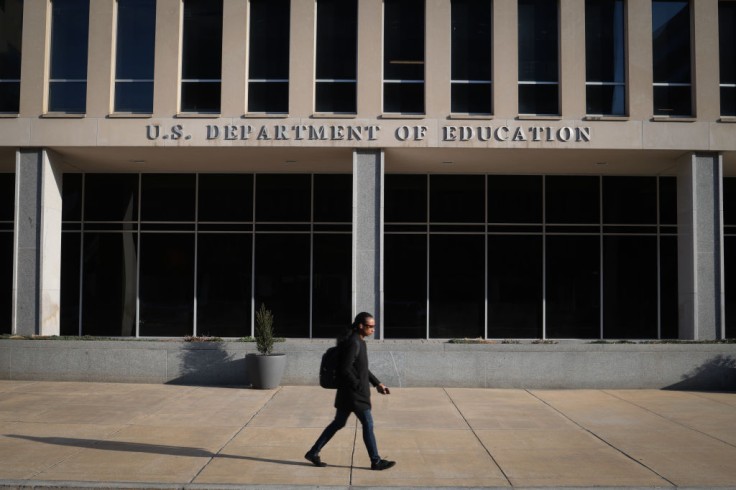
The U.S. Department of Education published a press release on April 10 titled "Victories for American Taxpayers: Exposing COVID-Era Fraud, Waste, and Abuse in Federal Education Programs", detailing three specific findings from its Office of Inspector General involving the misuse of pandemic-era education relief funds across Puerto Rico, West Virginia, and Wisconsin.
The press release, framed as part of President Trump's Task Force to Eliminate Fraud, focuses on a genuinely significant oversight challenge: what happened to the $190 billion in Elementary and Secondary School Emergency Relief funds distributed across three federal relief bills — the CARES Act (2020), the CRRSA Act (2020), and the American Rescue Plan (2021) — when they went out the door with limited guardrails during one of the most disruptive crises in modern American education history.
The Three Cases
Puerto Rico — $3.9 Million in Improperly Used ESSER Funds
A recent OIG inspection found that the Puerto Rico Department of Education improperly used $3.9 million in American Rescue Plan Elementary and Secondary School Emergency Relief funds on services that were not delivered as required and failed to support student academic progress as intended. The inspection was issued March 17, 2026.
The finding is notable partly because Puerto Rico was among the states and territories that had received approved extensions to spend remaining ARP ESSER funds through March 30, 2026 — a deadline the Trump administration later moved to rescind in a March 2025 action that was partially blocked by federal courts after 16 states and the District of Columbia sued.
West Virginia — $3.4 Million Fraud Scheme by School Maintenance Director
An OIG criminal investigation resulted in a guilty plea from a maintenance director at Boone County Schools in West Virginia, along with his parents and a contractor, who defrauded the school district out of $3.4 million. The scheme involved falsifying documents and overbilling for large quantities of janitorial and custodial products — either delivering far fewer products than billed, or billing for products that were never delivered at all.
The Boone County case is a clear example of criminal fraud — not disputed financial management or administrative misjudgment, but deliberate falsification of documents for personal gain. The Department of Justice's U.S. Attorney's Office for the Southern District of West Virginia prosecuted the case.
Wisconsin — $20 Million to 184 Ineligible Nonpublic Schools
An OIG audit found that the Wisconsin Department of Public Instruction improperly approved applications from nonpublic schools for funding under the American Rescue Plan Emergency Assistance to Non-Public Schools program (ARP EANS). More than $20 million in ARP EANS-funded services and assistance was provided to 184 schools that did not meet program eligibility requirements.
The ARP EANS program was designed to help private nonprofit schools that enrolled low-income students and were disproportionately impacted by the pandemic. The Wisconsin OIG finding suggests the state agency failed to adequately screen applicants against eligibility criteria before approving and distributing funds.
The Broader Context: $190 Billion, Limited Guardrails, Ongoing Oversight
The three cases represent a small fraction of what was an unprecedented federal spending program. Congress distributed approximately $190 billion in ESSER funds — roughly three times the federal government's typical annual K-12 education spending — across three rounds between 2020 and 2021. The funds were designed to help schools reopen safely, address learning loss, support student mental health, expand broadband access, and retain educators during a period of extreme institutional stress.
The OIG has been auditing states' and districts' use of ESSER funds since 2020, with the mandate extended through at least 2025 and beyond. While earlier OIG audits found largely administrative issues — documentation gaps, inadequate review processes, weak internal controls — rather than outright criminal fraud, the OIG consistently warned that weak internal controls "open the door to fraud." The Boone County case is an example of that door being walked through.
A Government Accountability Office report confirmed that most ESSER spending went toward legitimate student needs, but flagged weak oversight at the state and district level as an ongoing concern. Independent education finance researchers found that nearly 50% of ARP ESSER funds went toward labor costs — hiring teachers, reading specialists, school counselors, and other staff — with remaining funds going to tutoring programs, technology, facilities improvements, and summer learning programs.
The Trump administration has pursued a dual approach to COVID education relief funds: on one hand, using the OIG to identify and publicize instances of fraud; on the other, rescinding more than $2.5 billion in approved spending extensions in March 2025 — a decision that affected 41 states and territories that had contracted for specific school improvement projects and was partially blocked by a federal court in May 2025.
What Schools and Districts Should Know
For school districts and state education agencies that received ESSER funds, the OIG's ongoing audit work means that documentation of how funds were spent, contracted, and delivered remains important even years after the spending deadline. The OIG hotline — oig.ed.gov/oig-hotline — accepts reports of suspected fraud, waste, or abuse of federal education funds.
For the families and students whose schools received these funds, the press release's three cases represent genuinely troubling failures: money intended for learning recovery, safe reopening, and student mental health support that was instead stolen, mismanaged, or distributed to ineligible recipients. The total documented in this press release — approximately $27 million across three cases — is significant at the district and state level, though it represents a small fraction of the overall ESSER program.
The Department says additional crackdowns are expected throughout 2026, with the OIG continuing to audit how states and districts used ESSER funds across the full scope of the program.
© 2026 University Herald, All rights reserved. Do not reproduce without permission.


