University of Utah Powers Nearly 100,000 Jobs, $18.1 Billion in Economic Activity
By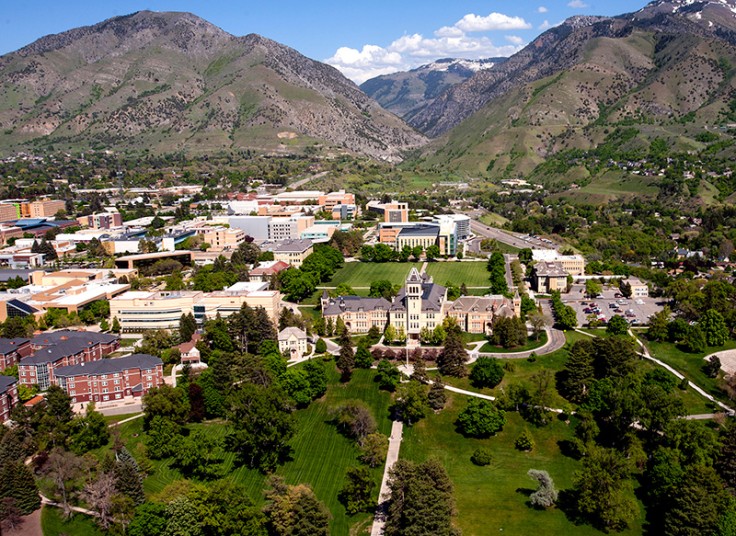
The University of Utah's economic influence extends far beyond its Salt Lake City campus, driving nearly 100,000 jobs and generating $18.1 billion in annual economic output across the state, according to a comprehensive new analysis that underscores the institution's role as an economic powerhouse and workforce engine.
A State-Wide Economic Force
The February 2026 report from the Kem C. Gardner Policy Institute reveals that Utah's flagship university supports 97,191 jobs statewide—representing 4.1% of all employment in Utah—making it the state's second-largest employer with 44,801 direct employees. The institution's economic contribution equals $7.6 billion in earnings, $10.3 billion in gross domestic product, and $18.1 billion in total output.
These figures capture not just the university's direct spending, but the ripple effects throughout Utah's economy as employees and suppliers circulate money through local businesses, creating what economists call indirect and induced economic activity.
"The University of Utah generates one of the largest economic and societal contributions to the state through education, research, health care, and statewide engagement," according to the report's lead analyst Andrea Thomas Brandley, Senior Education Analyst at the Gardner Institute.
More Than Just a University: A Healthcare Giant
What distinguishes the University of Utah from many peer institutions is its comprehensive academic medical system. University of Utah Health accounts for a substantial portion of the economic impact, with hospitals and clinics alone supporting 36,066 jobs and $6.9 billion in output.
As Utah's only academic medical center and the state's sole National Cancer Institute-designated Comprehensive Cancer Center in the Mountain West, the university trains approximately two-thirds of Utah's physicians. The medical enterprise enrolled 6,360 students in health-related programs during 2023-24 and graduated 1,376 health professionals—critical pipeline development as healthcare remains the fastest-growing industry nationally.
The Huntsman Cancer Institute, which manages the globally unique Utah Population Database linking health data from over 11 million individuals, leads the nation in inherited cancer gene discovery and supports more than 300 active clinical trials.
Research Excellence Brings Federal Dollars to Utah
The University of Utah's designation as an R1 research institution and member of the prestigious Association of American Universities (AAU) translates directly into economic benefit. The university secured $691 million in research funding in fiscal year 2024, with approximately 77.5% originating from federal sources when including federal funds flowing through other entities.
This research activity alone generated 12,572 jobs and $1.5 billion in economic output. The federal research dollars represent "new money" flowing into Utah's economy that wouldn't exist without the university's research infrastructure and faculty expertise.
Research spans critical challenges facing Utah: the Great Salt Lake crisis, water scarcity and climate resilience, air quality along the Wasatch Front, mental health, chronic disease, and workforce transformation. The university's Technology Licensing Office ranks among the top 10 public universities for issued patents and licensing revenue, generating $31.3 million in licensing revenue in FY 2024 alone.
Workforce Pipeline: Keeping Talent in Utah
The university's impact on Utah's workforce quality extends decades beyond graduation. In the 2023-24 academic year, the U enrolled more than 35,000 students across 300-plus degree and certificate programs, awarding over 9,000 degrees and certificates.
Critically, nearly three-quarters of University of Utah graduates remain in Utah five years after graduation, with approximately two-thirds working in-state one year post-graduation. This retention rate—which increases over time as many graduates return after completing residencies or fellowships elsewhere—means the university's investment in education continuously compounds benefits to Utah's economy.
The economic data supports the individual return on education investment: Utah graduates with bachelor's degrees earn a median of $65,293 annually, while those with graduate or professional degrees earn $94,608—substantially higher than the state's overall median earnings of $54,148.
Graduate Education Dominance
The University of Utah's role becomes even more pronounced at advanced degree levels. The institution awarded 42.8% of all graduate degrees in Utah during 2023-24, and a remarkable 65.9% of all doctoral degrees statewide. This concentration of advanced degree production—817 doctorates and 2,370 master's degrees—positions the university as Utah's primary pipeline for high-level professional and research talent.
Construction and Capital Investment Fueling Growth
Beyond operational spending, the university's physical expansion drives economic activity. Using a five-year average to account for project variability, the U's construction and capital spending totaled $747 million annually, supporting 5,590 jobs and $1.2 billion in output.
Recent major projects include the Spencer Fox Eccles School of Medicine, the William Steward Building for Applied Sciences, and the Kathryn F. Kirk Center for Comprehensive Cancer Care at Huntsman Cancer Institute—infrastructure investments that enable cutting-edge research and clinical care while supporting Utah's construction sector.
Out-of-State Students and Visitors Inject New Money
More than 10,000 out-of-state students attended the university in-person during 2023-24, representing 30.2% of the in-person student population. These students' off-campus spending—estimated at $172 million after accounting for wages earned in Utah—represents "new money" flowing into the state's economy, supporting 1,800 jobs and $251 million in output.
Out-of-state visitors attending athletics, arts events, campus tours, and commencement ceremonies add another $3.8 million in economic impact, though the report notes this likely understates total visitor spending.
Component Units: The Hidden Economic Players
Often overlooked in university economic analyses are component units—affiliated but separately operated entities. At the University of Utah, five component units contribute substantially: ARUP Laboratories, the University of Utah Research Foundation, University of Utah Health Insurance Plans, Community Nursing Services, and the Eccles Endowment for Medical School Excellence.
These component units alone support 15,966 jobs and $3.8 billion in output, with ARUP Laboratories—a national reference laboratory—driving a significant portion of this impact through out-of-state revenue that brings new economic activity to Utah.
Beyond Economics: Societal Impact
While the economic figures are substantial, the report emphasizes they don't capture the university's full value. The institution's societal contributions—from the Bennion Center's 42,368 community service hours to University Neighborhood Partners' work in underserved communities—create benefits that resist quantification.
Red Butte Garden, the Utah Museum of Fine Arts, and the Natural History Museum of Utah serve as cultural anchors attracting thousands of visitors annually. The Lassonde Entrepreneur Institute, ranked top five among public universities for entrepreneurship, engaged 6,800 students and supported 508 startup teams in 2024.
University of Utah Health provided approximately $118 million in uncompensated care in FY 2024, ensuring access for vulnerable populations while the university prepares to open a new hospital and health campus in West Valley City, expanding services to one of Utah's most diverse and underserved communities.
Statewide Reach: 37 Cities, 15 Counties
Contrary to perceptions of universities as isolated campus entities, the University of Utah maintains physical presence across 37 Utah cities and 15 counties. From telehealth sites to community health centers, from research stations to educational outreach programs, the institution's footprint extends throughout rural and urban Utah.
This geographic distribution ensures the economic benefits—and educational access—reach beyond the Wasatch Front, supporting workforce development and healthcare delivery in communities throughout the state.
Methodology: Measuring True Economic Contribution
The analysis employed multi-regional input-output modeling using IMPLAN's 2023 database, a widely accepted methodology for economic impact studies. The study distinguished between "economic contribution" (measuring all university-related spending and its effects) and "economic impact" (measuring only activity funded by out-of-state revenue that represents truly new economic activity).
The comprehensive approach accounted for direct effects (university employment and purchases), indirect effects (suppliers hiring workers and making purchases), and induced effects (employees spending wages in the local economy), providing a complete picture of the university's economic role.
Future Challenges and Opportunities
As Utah continues rapid population growth—projected to reach 5 million residents by 2050—the University of Utah's role as workforce developer and economic engine becomes increasingly critical. Healthcare workforce needs alone will intensify as the population ages, while research funding competition grows fiercer among universities nationwide.
The university's success in attracting federal research dollars—particularly the 77.5% of research funding from federal sources—provides a competitive advantage but requires continuous investment in infrastructure, faculty recruitment, and research facilities to maintain.
Construction of new facilities, expansion of medical education capacity, and development of specialized programs in emerging fields like artificial intelligence, quantum computing, and climate science position the university for continued economic contribution growth.
Comparative Context: How the U Stacks Up
While the report doesn't directly compare the University of Utah to peer institutions, the data reveals an economic contribution proportional to leading public research universities. Supporting 4.1% of state employment and generating 3.7% of state GDP represents substantial concentration of economic activity within a single institution.
The university's research expenditure of over $700 million places it firmly within the top tier of R1 institutions, while its 65.9% share of doctoral degree production in Utah significantly exceeds typical flagship university shares in larger states with multiple research institutions.
Investment Returns: State Appropriation Context
The university received $492 million in state appropriations in FY 2024—representing just 5.8% of total revenue. This relatively modest state investment generates economic activity far exceeding the appropriation amount, with every state dollar catalyzing additional federal research funding, tuition revenue, clinical revenue, and philanthropic support.
The multiplier effect becomes particularly evident in research: federal research funding of $536 million represents new money flowing into Utah, leveraged partially by state investment in research infrastructure and faculty positions.
Looking Forward: Strategic Positioning
The University of Utah's leadership emphasizes the institution's vision "to improve the life and health of every Utahn and advance a new national higher education model for delivering societal impact." The economic data suggests this isn't mere aspirational language—the university's integration of education, research, and healthcare delivery creates a comprehensive model for regional impact.
As state and federal policymakers debate higher education funding, workforce development initiatives, and economic development strategies, the data underscores universities' role not just as educational institutions but as economic multipliers, workforce pipelines, and innovation engines.
For Utah specifically, the University of Utah's $18.1 billion economic output—generated from a total revenue base of $8.6 billion—demonstrates substantial leverage of resources. Each dollar flowing through the university generates approximately $2.10 in total economic output through direct spending and subsequent economic ripple effects.
More Than Numbers
While the economic figures are striking—97,191 jobs, $18.1 billion in output, 9,000 degrees annually—they represent flows of resources and activity. The deeper impact lies in the human capital developed, the discoveries made, the patients treated, and the communities served.
As the report concludes, "The University of Utah's mission creates substantial long-term value by developing human capital, strengthening the workforce, advancing innovation, and improving community well-being." The economic contribution analysis captures the quantifiable dimension of this value, but the full societal benefit extends far beyond what numbers can measure.
For prospective students, policymakers, community leaders, and taxpayers, the data provides concrete evidence of return on investment—not just in dollars, but in workforce preparation, healthcare access, research advancement, and economic opportunity that will shape Utah's future for decades to come.
© 2026 University Herald, All rights reserved. Do not reproduce without permission.


