China’s Academic Revolution: Five Universities Break Into Global Top 40, Catching Up to Western Giants
By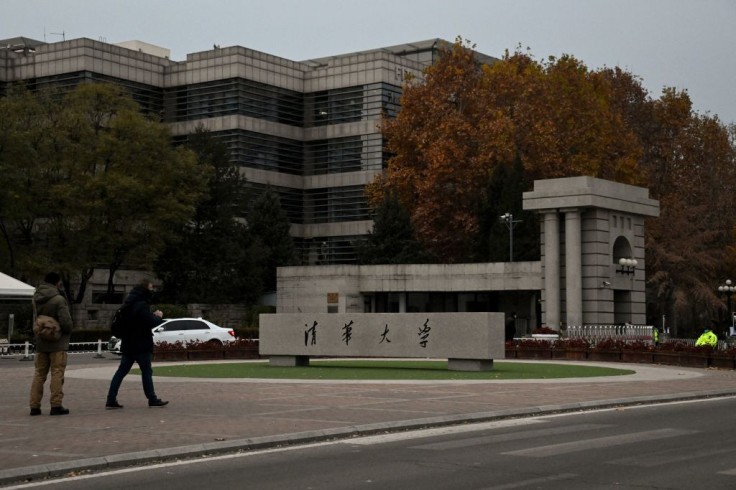
Chinese universities achieved historic breakthroughs in 2026 global rankings, with five institutions now occupying spots in the world's top 40 and mainland China firmly establishing itself as a rising academic superpower challenging centuries of Western educational dominance.
The dramatic ascent, documented across multiple ranking systems including TIME magazine's inaugural "World's Top Universities of 2026" and the Times Higher Education World University Rankings 2026, represents a fundamental shift in what experts describe as "the geopolitics of knowledge and innovation."
Ten years ago, China's two flagship institutions—Tsinghua University and Peking University—ranked 47th and 42nd respectively in global assessments. Today, they sit at 12th and 13th, knocking on the door of the exclusive global top 10 club that remains dominated by American and British universities.
"U.S. and U.K. universities continue to lead in academic performance, while China's universities are catching up in innovation and economic impact," the TIME-Statista analysis states, documenting how massive government investment and strategic priorities are rapidly closing the gap with established Western powers.
Five in the Top 40: A Historic Milestone
China's achievement of placing five universities in the global top 40 represents a doubling from just three institutions last year and marks the highest concentration of elite Chinese institutions ever recorded in international rankings.
Beyond Tsinghua (12th) and Peking (13th), which have held relatively steady positions, the real story lies in dramatic climbs by other Chinese powerhouses. Zhejiang University surged eight places to 39th, while Shanghai Jiao Tong University jumped 12 places to 40th. Both moved into the top 40 for the first time, overtaking America's prestigious Georgia Institute of Technology (joint 41st) and Canada's McGill University (joint 41st) in the process.
This breakthrough matters enormously for China's global academic standing. The top 40 represents an elite tier of institutions commanding worldwide recognition, attracting the most talented international students and faculty, and driving cutting-edge research that shapes industries and societies.
China now places 35 universities in the global top 500, surpassing Australia and cementing its position as the world's third-largest higher education power after the United States and United Kingdom in terms of elite institution concentration.
Innovation Powerhouse: Perfect Scores in Key Metrics
What makes China's rise particularly notable is the specific areas of excellence driving rankings improvements. Tsinghua and Peking already receive perfect scores of 100 for research income, research excellence (the amount of top research), and patents—the highest possible marks in categories measuring innovation and economic impact.
Zhejiang University and Shanghai Jiao Tong University both achieved perfect scores for their links to industry, demonstrating how Chinese institutions excel at translating academic research into commercial applications and economic value. This strength in industry partnerships aligns perfectly with ranking methodologies increasingly emphasizing universities' contributions to innovation and economic development.
TIME magazine's methodology particularly rewards institutions where students achieve extraordinary success through patenting new inventions and rising to business leadership positions. China's universities excel precisely in these outcome-focused metrics that measure tangible economic impact rather than traditional academic prestige alone.
Across all four research quality metrics in the Times Higher Education assessment, Chinese institutions showed significant improvements, driven by massive government investment in research infrastructure, aggressive international faculty recruitment, and strategic focus on high-impact publications in prestigious journals.
The Contrast: 62 US Universities Decline
China's ascent appears even more dramatic when contrasted with American struggles. While the United States still dominates the global top 10 with seven institutions, broader trends reveal concerning deterioration.
In the Times Higher Education 2026 rankings, 62 American universities declined compared to 2025, while only 19 rose. Well-known institutions suffered historic lows: Duke University dropped to 28th (from 20th in 2021), Columbia fell to 20th, and the University of Chicago hit 15th—all representing worst-ever positions for these prestigious schools.
The United States now has just 102 institutions in the world's top 500, marking America's lowest representation ever in this elite group. This decline accelerates a longer-term trend that experts warn could fundamentally reshape global academic leadership within a generation.
"These downward pressures continue a longer-term trend," the Times Higher Education analysis notes ominously. "It could also signal a new direction of travel as data from the 2026 rankings largely pre-dates the deep research funding cuts and international talent visa restrictions implemented in the U.S. in recent months."
Strategic Investment vs. Funding Cuts
The diverging trajectories of Chinese and American universities reflect fundamentally different national approaches to higher education investment and strategic priorities.
China has pumped enormous resources into its university system over the past two decades, building state-of-the-art research facilities, recruiting top international faculty with competitive compensation packages, and providing sustained funding for ambitious research programs. The government views elite universities as essential to national competitiveness, technological advancement, and international prestige.
In contrast, American universities face mounting pressures from multiple directions. Federal research funding has become increasingly competitive with declining success rates. State support for public universities has eroded over decades. Recent policy changes restricting international students and curtailing certain research programs add new challenges.
The United Kingdom faces parallel struggles. Despite Oxford's continued dominance at number one and Cambridge's strong showing at joint third, the number of UK universities that declined (28) more than doubled those that improved (13). UK representation in the world's top 500 dropped to 49 institutions, another record low.
The Stagnation Question: Have Top Chinese Universities Hit a Ceiling?
Despite celebrating historic achievements, some experts detect troubling signs that China's elite institutions may be approaching a ceiling. Tsinghua has remained at 12th place for three consecutive years. Peking moved up just one place during that time and has been 13th for two straight years. The National University of Singapore similarly stalled at 17th.
This stability contrasts sharply with the previous decade, during which Tsinghua climbed 35 places, Peking rose 28 places, and NUS gained seven spots. The question is whether this represents a temporary plateau or a more fundamental constraint.
Rajika Bhandari, principal of Rajika Bhandari Advisors, an international education research and strategy firm, argues that Asia's top universities have not hit a ceiling but are being constrained by national policy environments.
"To move higher, they need more autonomy, stronger support for fundamental research, and fewer restrictions on academic freedom," Bhandari said. "Without that, there's only so far rankings performance can go."
The data supports this analysis. While Tsinghua and Peking score perfectly on quantitative metrics like research income and patents, they receive much lower scores for international outlook than their UK and US counterparts in the global top 10. They also register as weaker in typical research quality—both areas unlikely to change quickly without policy shifts enabling greater academic freedom and international collaboration.
Beyond the Top: Broad-Based Gains
China's success extends well beyond its flagship institutions. Eighteen Chinese universities achieved their best-ever positions in 2026 rankings, demonstrating widespread improvements across the country's higher education system.
The number of Chinese universities in the top 200 remains steady at 13 institutions for the third consecutive year, showing that while the very top tier may face challenges breaking into the global top 10, Chinese universities have firmly established themselves in the next tier of global excellence.
Asia as a region now features 929 universities in rankings, more than any other region and up from 853 in 2025. This growth reflects sustained investment and strategic priorities across the continent, with South Korea, Hong Kong, Singapore, and emerging nations like Indonesia and Malaysia all showing gains.
Hong Kong secured a record six institutions in the top 200, led by the University of Hong Kong, which climbed from 35th to 33rd. All six of Hong Kong's previously ranked universities rose, with improvements stemming largely from enhanced teaching metrics.
South Korea achieved remarkable progress, now placing four universities in the top 100—double its 2025 count of two. The nation rose significantly in all four research quality metrics, demonstrating that sustained investment produces results across multiple dimensions.
QS Rankings: Additional Validation
China's rise is validated across multiple ranking systems. In the 2026 QS World University Rankings released in June 2025, mainland China demonstrated a strong presence with 72 institutions ranked—the third highest after the United States (192) and United Kingdom (90).
About 45 percent of Chinese universities climbed in rank, while 35 percent declined. Among China's elite universities in the QS rankings, Peking University held steady at 14th, retaining its top spot domestically. Tsinghua rose seven places to 17th, and Fudan climbed nine to 30th—all historic highs for these institutions.
The QS rankings highlight Chinese institutions' strength in research and reputation, with 71 percent improving in citations per faculty and 64 percent improving in employer reputation. These gains demonstrate that Chinese universities are not simply gaming ranking methodologies but are achieving genuine improvements in research quality and graduate employability.
The "Reverse Brain Drain"
Perhaps most significant for long-term competitiveness, global academic talent flows are beginning to reverse. For decades, the brightest minds worldwide flocked to American and British universities, strengthening those systems while weakening home countries. This pattern is changing.
Chinese universities now offer competitive salaries, state-of-the-art facilities, and research freedom that increasingly matches Western opportunities. Top researchers are choosing positions at Chinese institutions over American or British alternatives, particularly in STEM fields where China excels.
If this "reverse brain drain" accelerates, Western academic dominance will erode faster than rankings alone suggest. The cumulative advantage built over generations through attracting global talent could dissipate within a single generation if talent flows reverse.
Ming Cheng, professor of higher education at Sheffield Hallam University, warned that continued political pressure on leading Western institutions could trigger broader brain drains and weaken global standing.
Industry Partnerships: A Chinese Strength
A key driver of China's rise involves strategic emphasis on industry partnerships that translate academic research into commercial applications. This aligns perfectly with ranking methodologies that increasingly value economic impact and innovation metrics.
Chinese universities have developed sophisticated technology transfer mechanisms, cultivating relationships with major corporations and startups, and creating ecosystems where academic breakthroughs rapidly move from laboratories to markets. This entrepreneurial approach contrasts with more traditional academic cultures in some Western institutions.
The perfect scores achieved by Zhejiang University and Shanghai Jiao Tong University for industry links demonstrate systematic excellence in this domain. These partnerships provide both financial resources and practical validation of research relevance, creating virtuous cycles of funding, prestige, and impact.
International Student Implications
For prospective international students, China's rise presents increasingly compelling alternatives to traditional Western destinations. Chinese universities offer several advantages: lower tuition costs, modern facilities, growing academic reputations, and direct pathways into Asia's booming economies.
Students prioritizing STEM fields, particularly engineering, computer science, and emerging technologies, may find Chinese institutions offering opportunities matching or exceeding Western alternatives. The combination of state-of-the-art laboratories, generous research funding, and connections to China's technology sector creates attractive environments for ambitious students.
Cultural and linguistic barriers remain considerations, though many Chinese universities now offer English-language programs and have developed international support services. Political concerns about academic freedom and government oversight also factor into student decisions.
Looking Ahead: Can China Break Into the Top 10?
The critical question is whether Chinese universities can break into the exclusive global top 10 or if structural constraints will keep them just outside this elite club.
Reaching the top 10 requires not just quantitative excellence but qualitative dimensions like international outlook, academic freedom, and the intangible prestige that accumulates over centuries. Oxford and Cambridge benefit from nearly millennium-long reputations. Harvard, MIT, and Stanford built dominance over more than a century.
For Chinese universities to crack the top 10, experts suggest they need greater institutional autonomy, stronger protections for academic freedom, enhanced international collaboration, and continued research investment. Without policy changes enabling these conditions, even perfect scores on quantitative metrics may prove insufficient.
However, if China maintains current investment levels while Western nations reduce support for higher education, the competitive balance will continue shifting. Demographic trends—particularly declining youth populations in developed nations—add pressure on Western systems while China's massive population provides deep talent pools.
A New Multipolar Academic World
The 2026 rankings document an emerging multipolar academic world where Western monopoly on excellence is ending. While elite American and British institutions will remain world-class for the foreseeable future, their exclusive claim to global leadership is breaking down.
Chinese universities have established themselves as legitimate competitors in innovation, research quality, and industry partnerships. They continue improving while Western institutions face resource constraints and policy challenges.
For students, researchers, and policymakers, this shift creates both opportunities and challenges. A more diverse global higher education landscape offers more choices and reduces dependence on any single national system. But it also raises questions about academic standards, values, and freedom in an increasingly competitive international environment.
As Phil Baty of Times Higher Education noted, these rankings reveal "a major shift in the geopolitics of knowledge and innovation." China's dramatic rise over the past decade represents just the beginning of a transformation that will reshape global higher education for generations to come.
© 2026 University Herald, All rights reserved. Do not reproduce without permission.


