TIME Reveals World’s Top Universities 2026: Oxford #1, But Elite Institutions Serve “Society’s Most Privileged”
By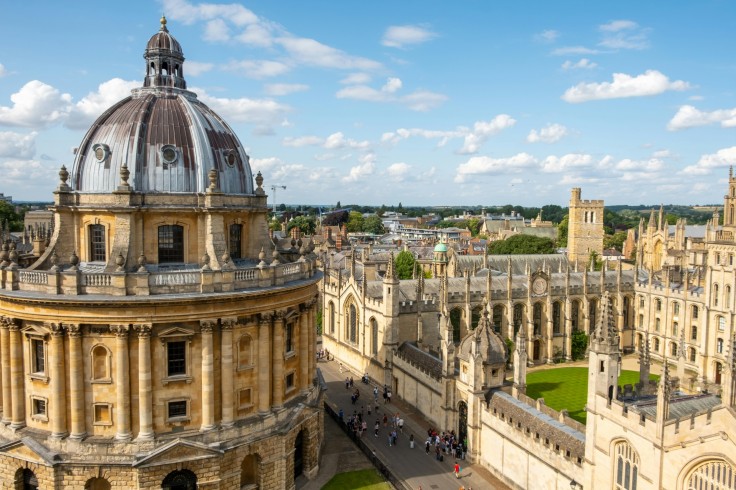
TIME magazine, partnering with data analytics firm Statista, unveiled its inaugural "World's Top Universities of 2026" ranking Wednesday, introducing a revolutionary methodology that emphasizes student success through patents, business leadership, and innovation while simultaneously exposing stark inequalities in who actually gains access to these elite institutions.
The comprehensive study evaluated 500 universities globally using a framework structured around three key pillars: academic capacity and performance, innovation and economic impact, and global engagement. The ranking represents a significant departure from traditional reputation-based assessments by focusing on tangible student outcomes rather than institutional prestige alone.
The University of Oxford claimed the number one position globally, with the University of Cambridge ranked seventh, demonstrating continued British strength in the inaugural TIME ranking. However, the accompanying analysis reveals that at these two institutions, students from private high schools account for nearly half of enrollments despite representing just 7 percent of all UK high school students.
A New Lens on University Excellence
The ranking places particular emphasis on the extent to which students achieve extraordinary success, including patenting new inventions and rising to leadership roles in business. This outcome-focused approach helps identify where students are likely to achieve the greatest success and contribute most to society as the world order shifts.
"U.S. and U.K. universities continue to lead in academic performance, while China's universities are catching up in innovation and economic impact," the analysis states, documenting a significant shift in global academic power dynamics.
To qualify for consideration, institutions needed to be older than three years, offer bachelor's degrees, and enroll more than 2,000 students. Universities were shortlisted if they had at least one highly cited researcher according to Clarivate among their faculty, were among the most renowned and frequently mentioned institutions, or applied through an open call to action published on TIME.com.
The analysis period ran from June through August 8, 2025, with the 500 universities achieving the highest final scores across all evaluation criteria featured in the final ranking.
The Uncomfortable Reality: Elite Access Remains Restricted
Despite celebrating institutions where students achieve remarkable success, the TIME analysis reveals an uncomfortable reality: "in most countries, these top universities are most accessible to children from high-income families, limiting their socioeconomic diversity."
Research on the 12 Ivy-Plus colleges in the United States—comprising the eight Ivy League universities plus Stanford, MIT, Duke, and the University of Chicago—shows these institutions all rank among TIME's top 60. Yet the data expose troubling access patterns.
More than 15 percent of students at these Ivy-Plus institutions come from families in the top 1 percent of the U.S. national income distribution, with household incomes above $600,000 per year. This concentration of privilege far exceeds what random distribution or meritocratic selection would produce.
"Unfortunately, the data show that access for talented students from families outside the traditional 'elite' is much more restricted than it ought to be," the analysis concludes.
International data confirms this pattern extends globally. In Chile, students from elite private schools are 16 times more likely to enroll in the most selective programs at the nation's top universities, including the University of Chile, which appears in TIME's rankings.
The Admissions Advantage of Wealth
Perhaps most troubling, the TIME analysis reveals that wealth advantages extend beyond differences in pre-college resources like school quality. Much of the disparity arises purely from college admissions policies themselves.
Consider two students who apply to college with identical SAT scores of 1500, one from a family in the top 1 percent and another from a middle-class family. The student from the high-income family is more than twice as likely to be admitted to an Ivy-Plus college compared to students from middle-class backgrounds.
Similarly, a student whose parents are business executives is far more likely to be admitted to top-ranked colleges than a student with the same high school test scores and grades whose parents are teachers or bus drivers.
If students from the top 1 percent were admitted to Ivy-Plus schools at the same rate as middle-class students with the same SAT or ACT scores, the share of students from the top 1 percent at America's top colleges would fall by nearly half.
Three Drivers of Wealth Advantage
The analysis identifies three factors driving the high-income admissions advantage: legacy preferences, non-academic ratings, and athletic recruitment.
Applicants from top 1 percent families whose parents attended an Ivy-Plus college ("legacy applicants") are five times more likely to be admitted than non-legacy applicants with equivalent qualifications.
Non-academic ratings, which assess extracurricular activities, personal qualities, and other subjective factors, systematically favor wealthy applicants who can afford extensive activities, travel experiences, and private coaching. Athletic recruitment disproportionately benefits affluent students who participate in expensive sports like crew, fencing, and equestrian activities.
The Three Pillars of the TIME-Statista Methodology
The analysis is structured around three key pillars: academic capacity and performance, innovation and economic impact, and global engagement.
The academic pillar assesses traditional measures of educational quality including faculty credentials, student selectivity, and teaching resources. However, unlike purely reputation-based rankings, this component represents just one-third of the overall evaluation.
The innovation and economic impact pillar tracks tangible outcomes including patent production, startup creation, industry partnerships, and graduates' career trajectories. This forward-looking component reflects growing emphasis on universities' contributions to economic development and technological advancement.
The global engagement pillar evaluates universities' international outlook, collaboration patterns, and ability to attract students and faculty from diverse national backgrounds. This recognizes that solving complex global challenges requires institutions capable of fostering cross-cultural knowledge exchange.
Big Data Tracking Student Outcomes
The ranking draws on big data analysis tracking outcomes of millions of college students over time, assessing which institutions truly prepare graduates for extraordinary achievement rather than simply measuring institutional resources or reputation.
The research underlying the ranking draws on multiple data streams to enable triangulation and enhance validity. Statista relies on primary sources including direct university submissions via application forms and officially published institutional records. Secondary sources include global databases and national datasets from statistical agencies and relevant ministries.
This multi-source approach helps ensure within-country comparability of reported data despite uneven reporting practices across regions and national contexts.
Methodology Limitations and Caveats
The publishers emphasize that ranking results should not be used as the sole source of information for future deliberations about university selection. The information should be considered in conjunction with other available information about universities or, ideally, accompanied by visits to institutions.
The quality of universities not included in the ranking is not disputed. With tens of thousands of universities worldwide, inclusion in a 500-institution ranking represents one form of recognition but does not diminish institutions serving different missions or populations.
The methodology's emphasis on patents, business leadership, and economic impact may inherently favor research-intensive universities with strong engineering and business programs. Liberal arts colleges excelling in humanities education or regional universities serving local populations may score lower despite fulfilling critical social missions.
China's Innovation Surge
The TIME-Statista analysis documents China's universities "catching up in innovation and economic impact" to established Western leaders. This reflects massive government investment in research infrastructure, aggressive international faculty recruitment, and strategic focus on translating academic work into patents and commercial ventures.
While specific rankings beyond Oxford at number one and Cambridge at number seven were not disclosed in available reporting, the documented Chinese strength in innovation metrics suggests leading Chinese institutions likely appear prominently in the overall top 500.
This pattern mirrors findings in other major ranking systems, where Chinese universities have risen dramatically in recent years through sustained investment and strategic priorities aligned with ranking methodologies emphasizing research output and industry partnerships.
Pathway Toward Greater Meritocracy
Despite exposing substantial wealth advantages in elite admissions, the TIME analysis argues that reform is possible: "The bottom line is that the debate about meritocracy vs. diversity itself misses the point: When we measure merit by what predicts success—not by parental wealth—meritocracy can actually increase diversity."
The analysis recommends that top American universities "could both broaden access and strengthen meritocratic norms in admissions by focusing more heavily on indicators of academic potential and reducing preferences that primarily track family income."
Specific reforms include eliminating legacy preferences, reducing the weight placed on non-academic factors such as extracurriculars and athletics, and being more transparent about admissions criteria.
"Admitting students to top-ranked colleges on the basis of their own merit would increase the representation of students from middle-class families on college campuses and expand the talent pool for businesses to hire," the analysis concludes.
Implications for Students and Families
For prospective students navigating university selection, the TIME-Statista ranking offers a complementary perspective to traditional assessments. Students interested in entrepreneurship, patent development, or business leadership may find this ranking particularly relevant given its emphasis on these outcomes.
However, the accompanying wealth access analysis should give middle-class and working-class students pause. If elite institutions systematically advantage applicants from wealthy families beyond what academic merit would justify, students from modest backgrounds face significantly reduced admission odds at institutions the ranking identifies as driving extraordinary success.
This creates a circular pattern where families already possessing substantial resources gain access to educational experiences that compound their advantages, while talented students from less affluent backgrounds face systematic barriers unrelated to academic potential.
Times Higher Education Rankings: A Different Picture
The TIME-Statista ranking represents just one of several major global university ranking systems. The Times Higher Education (THE) World University Rankings 2026, released in October 2025, offers an interesting comparison.
THE also placed Oxford at number one globally for a record tenth consecutive year, followed by MIT at second place, with Cambridge and Princeton tied for third. Imperial College London ranked eighth, giving the UK three universities in the global top ten.
However, THE's analysis reveals concerning trends for Western institutions. Of 105 UK institutions ranked in consecutive years, 27 percent declined and just 12 percent improved. It's the first time the number of UK universities in the global top 500 has dipped below 50.
American universities face similar challenges. Harvard fell to tied fifth place, its lowest position in six years, while numerous other prestigious institutions hit historic lows in the THE rankings.
Meanwhile, China now has five universities in the top 40, up from three last year, and Hong Kong occupies a record six spots in the top 200. These shifts suggest a "major shift in the geopolitics of knowledge and innovation," according to THE chief knowledge officer Phil Baty.
The convergence between TIME-Statista and THE rankings on Oxford's continued dominance, coupled with similar observations about China's rise and Western challenges, suggests these patterns reflect genuine shifts in global higher education rather than methodological artifacts of any single ranking system.
© 2026 University Herald, All rights reserved. Do not reproduce without permission.


