Kent Syverud Named University of Michigan President After Leadership Crisis
A ‘Double Wolverine’ returns home to lead one of America’s premier public universities after months of unprecedented turmoil
By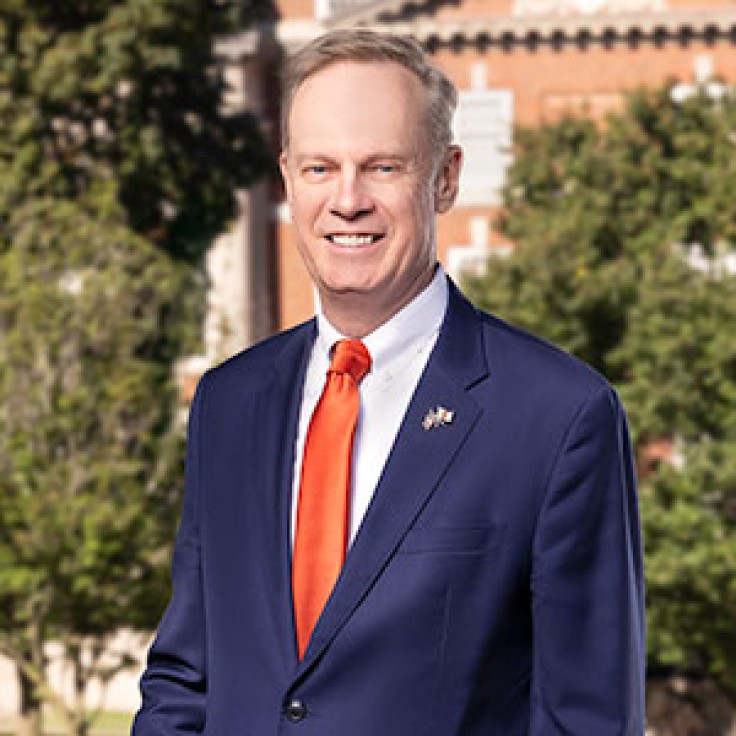
The University of Michigan Board of Regents voted today to appoint Syracuse University Chancellor Kent Syverud as the institution's 16th president, bringing a Michigan alumnus and seasoned administrator back to Ann Arbor to lead a flagship university that has experienced extraordinary leadership instability in recent years.
Syverud, 69, who earned both his law degree and master's in economics from Michigan in the early 1980s and later served on the Law School faculty, becomes the fifth person to hold or serve in Michigan's presidency this decade. The appointment marks an emphatic end to a period that saw the previous president, Santa Ono, depart after less than three years amid a failed attempt to take the University of Florida presidency that became entangled in national debates over diversity, equity and inclusion policies.
"Kent Syverud embodies the Michigan Difference," said student body president Eric Veal Jr. in a statement praising the selection. "He is profoundly student-centered."
A Leader Forged in Financial and Athletic Transformation
Syverud arrives at Michigan with an impressive track record from his 12-year tenure at Syracuse, where he inherited an institution facing serious challenges and transformed it into a financially stable, academically strengthened university with a revitalized campus and national profile.
When Syverud assumed Syracuse's chancellorship in January 2014, the university was struggling with serious financial pressures and brand challenges. He erased 440 million dollars in inherited debt, doubled the endowment to above two billion dollars, and spearheaded a 1.5 billion dollar fundraising campaign. Under his stewardship, Syracuse completed a 120 million dollar renovation of the Carrier Dome and invested 500 million dollars in campus growth, including three new dormitories.
"I don't think people fully appreciate the challenges that were presented to him almost from the day he started as chancellor," Vice Chancellor Mike Haynie told reporters. "There were significant financial pressures, significant challenges related to our brand and being truly competitive to attract students and talent. I think what Kent has been able to do masterfully is to see the big picture."
Beyond the balance sheet, Syverud demonstrated an understanding that modern American universities must excel in both academic rigor and competitive athletics. He currently serves as chair of the Atlantic Coast Conference Board of Directors and oversaw Syracuse's navigation of the seismic shifts in college athletics, including conference realignment and the emergence of name, image and likeness compensation for student-athletes.
His commitment to excellence extended to strategic academic investments as well. Syverud promoted STEM programs, directed the establishment of focused multidisciplinary research institutes, and played a role in bringing Micron Technology's 100 billion dollar chip fabrication project to Central New York, cementing Syracuse's connection to regional economic development.
The 2024 TIAA Institute Hesburgh Award winner for Leadership Excellence also dramatically expanded Syracuse's commitment to veterans and military-connected families, with enrollment in that population more than tripling during his tenure. The university now enrolls more than 1,000 veteran and military-connected students, earning recognition as one of the best private universities for veterans in the nation.
Returning to a University in Crisis
Syverud inherits a university reeling from unprecedented presidential turnover and facing complex challenges that have tested its institutional values and national standing. He replaces interim president Domenico Grasso, who was appointed in May 2025 after Santa Ono's abrupt departure following a controversy that highlighted the intense politicization of higher education leadership.
Ono, who served from October 2022 to May 2025, became Michigan's president with high expectations following the January 2022 firing of Mark Schlissel, who was dismissed after an investigation revealed an inappropriate relationship with a university employee. Mary Sue Coleman, Michigan's first female president, returned for a brief interim stint to stabilize the institution before Ono's arrival.
Ono's tenure at Michigan, while marked by notable achievements including partnerships with OpenAI and Los Alamos National Laboratory and the expansion of the Go Blue Guarantee program, became increasingly fraught with controversy. In March 2025, responding to Trump administration executive orders, Ono shut down the university's DEI offices, a reversal that drew sharp criticism from faculty who had valued his previous support for diversity initiatives.
When Ono announced in May 2025 that he was the sole finalist for the University of Florida presidency, he attempted to reframe his position on DEI in an Inside Higher Ed op-ed, writing that while he initially supported such programs for their goals of "equal opportunity and fairness for every student," he came to believe that "DEI became something else—more about ideology, division and bureaucracy, not student success."
The Florida Board of Governors rejected Ono's appointment in a historic 10 to 6 vote in June, following intense scrutiny from conservative critics including Donald Trump Jr. and U.S. Senator Rick Scott. During a contentious three-hour meeting, board members grilled Ono on topics ranging from his past support for DEI initiatives to his handling of pro-Palestinian protests on Michigan's campus.
The rejection was unprecedented—the Florida board had never before blocked a university trustee's presidential selection—and left Ono without a position at either institution. He has since joined the Ellison Institute of Technology as president of its global division.
Faculty Concerns and Community Reception
Not everyone at Michigan welcomed the Syverud appointment with enthusiasm. Faculty Senate chair Derek Peterson expressed concern that the search committee had not adequately considered the desires of the university community, suggesting that the rapid selection process may have bypassed important input from faculty, staff and students.
The concern reflects broader anxieties within Michigan's academic community about leadership stability and institutional direction. Faculty members have watched three different leaders occupy the president's office in less than three years, creating uncertainty about long-term strategic planning and institutional priorities. Some worry that repeated turnover has weakened Michigan's ability to maintain its position among the nation's premier public research universities.
Peterson's comments also hint at lingering tensions from the Ono era, when faculty overwhelmingly passed resolutions calling for stronger defense of academic freedom and DEI initiatives, only to see Ono eliminate those offices weeks before his departure. Faculty members questioned whether Syverud's selection was rushed to fill a leadership void without proper consultation.
What Syverud Brings to Ann Arbor
Syverud's deep Michigan roots distinguish him from his immediate predecessors. As a University of Michigan Law School graduate who later joined its faculty from 1987 to 1997, earning tenure in 1992 and serving as Associate Dean for Academic Affairs from 1995 to 1997, he brings both institutional knowledge and proven administrative capability. He also served as an expert witness for Michigan in the landmark affirmative action case Grutter v. Bollinger.
His professional credentials are equally impressive. After graduating magna cum laude from Michigan Law, he clerked for U.S. District Court Judge Louis Oberdorfer and U.S. Supreme Court Justice Sandra Day O'Connor before practicing law at Wilmer, Cutler & Pickering in Washington. He served as dean at both Vanderbilt Law School and Washington University School of Law before ascending to Syracuse's top position.
Syverud's extensive experience navigating politically charged issues while maintaining institutional integrity may prove particularly valuable at Michigan. His handling of Syracuse's finances, his ability to build consensus among diverse stakeholders, and his track record of completing major initiatives suggest a leader capable of bringing stability to an institution that desperately needs it.
Michigan Board of Regents Chair Sarah Hubbard has made clear the university's immediate priorities. "A Michigan person will run Michigan," she told The Detroit News, emphasizing the board's desire for a leader with genuine ties to the institution and an understanding of its unique culture and mission.
The Road Ahead
Syverud assumes the Michigan presidency at a moment when higher education faces extraordinary external pressures. Federal policies on DEI, Title VI compliance regarding antisemitism, immigration restrictions affecting international students, and questions about the value and cost of college education are reshaping the landscape for all universities, particularly large public research institutions like Michigan.
The university also faces internal challenges. Student protests over Middle East policy, debates about free speech and campus safety, questions about residential life and campus climate, and competition for top faculty and students all demand presidential attention. Michigan's athletic programs, while successful, have also faced scrutiny over recruiting practices and conference realignment discussions that could reshape the Big Ten.
Perhaps most critically, Syverud must restore confidence among Michigan's varied constituencies—faculty who seek academic freedom and shared governance, students who want responsive leadership and a supportive campus environment, alumni who value tradition and excellence, state legislators who control appropriations, and donors whose philanthropy sustains ambitious programs. His predecessor's departure under controversial circumstances has left some of these relationships strained.
Syverud's announcement last August that he would step down from Syracuse at the end of the current academic year positions him to begin at Michigan in mid-2026, giving the university several months to plan the transition and allowing Syverud to complete his Syracuse commitments honorably.
A Moment of Reckoning
The appointment of Kent Syverud as Michigan's 16th president represents more than a personnel decision—it reflects broader questions about leadership in American higher education during an era of intense political polarization. Can a university president navigate competing demands from conservative critics, progressive faculty and students, pragmatic administrators, and donor interests while maintaining the institution's core academic mission?
Syverud's Syracuse record suggests he can balance these tensions. He eliminated substantial debt while investing in growth, maintained academic quality while expanding access, strengthened athletics while prioritizing research, and built political relationships while protecting institutional autonomy. Whether those skills translate to Michigan's larger scale, more complex political environment, and higher-profile stage remains to be seen.
For a university that has cycled through five presidential leaders in just over a decade—a period of instability unprecedented in Michigan's modern history—Syverud's appointment carries the weight of institutional expectations. Michigan's community is hoping that a "Double Wolverine" who knows the institution, understands its culture, and has demonstrated executive excellence at a peer institution can finally bring the stability and visionary leadership that one of America's great public universities desperately needs.
The University of Michigan deserves better than the chaos of recent years. Whether Kent Syverud can deliver that stability while advancing the institution's mission of providing "an uncommon education for the common man"—the vision articulated by legendary 19th-century President James Angell—will define his legacy and shape Michigan's future for years to come.
© 2026 University Herald, All rights reserved. Do not reproduce without permission.


