Tennessee Professor Wins $500,000 Settlement After Controversial Firing Over Charlie Kirk Social Media Post
By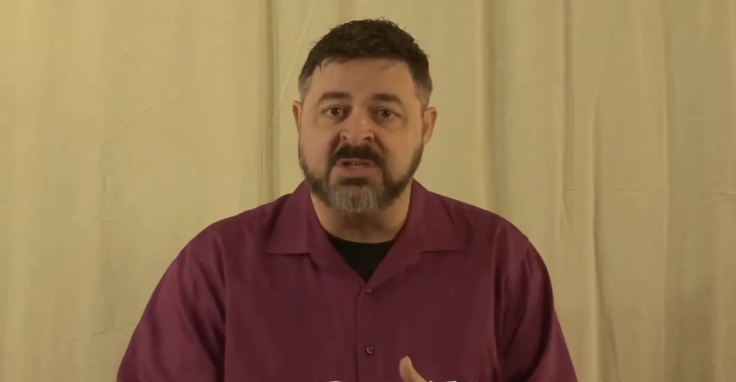
Clarksville, TN – In a significant development involving academic freedom and due process, Austin Peay State University has agreed to pay $500,000 and reinstate a tenured theater professor who was fired following a social media post related to the assassination of conservative activist Charlie Kirk.
Darren Michael, an associate professor of acting and directing who had served at the Tennessee institution since 2007, returned to his faculty position on December 30, 2025, marking the end of a contentious months-long dispute that raised questions about tenure protections, free speech, and institutional procedures at public universities.
The Incident That Sparked Controversy
The controversy began on September 10, 2025, when Charlie Kirk, the co-founder and executive director of Turning Point USA, was fatally shot during a campus event at Utah Valley University in Orem, Utah. Kirk's assassination sent shockwaves through conservative circles and triggered a wave of social media activity across the political spectrum.
In the immediate aftermath, Michael shared a 2023 Newsweek article on social media that quoted Kirk's own controversial statements about gun violence and the Second Amendment. The article's headline read: "Charlie Kirk says gun deaths are 'unfortunately' worth it to keep 2nd Amendment."
The quote referenced Kirk's remarks from a 2023 event where he stated: "I think it's worth to have a cost of, unfortunately, some gun deaths every single year so that we can have the Second Amendment to protect our other God-given rights. That is a prudent deal. It is rational."
Critically, Michael did not add his own commentary or caption to the post beyond an ellipsis ("..."), simply sharing the headline and article without explicit editorial comment.
Political Pressure and Swift Termination
The post quickly drew attention from Tennessee Senator Marsha Blackburn, a prominent Republican who shared a screenshot of Michael's post on X (formerly Twitter). Her post included not only Michael's social media content but also his faculty photograph, resume, email address, and phone number.
Blackburn tagged Austin Peay State University directly, writing: "What do you say, @austinpeay?" The public pressure from a high-profile senator created an immediate crisis for university administrators.
Two days later, on September 12, 2025, APSU President Mike Licari announced that Michael had been terminated. In a statement shared through campus communications, Licari characterized the social media activity as problematic on multiple levels.
"A faculty member of Austin Peay State University reshared a post on social media that was insensitive, disrespectful and interpreted by many as propagating justification for unlawful death," Licari said. "Such actions do not align with Austin Peay's commitment to mutual respect and human dignity. The university deems these actions unacceptable and has terminated the faculty member."
The university sent Michael a termination letter citing "recent social media posts that have caused significant reputational damage to the university."
Due Process Failure and Legal Exposure
The swift termination, however, created significant legal problems for the institution. Austin Peay State University, as a public institution, is bound by constitutional protections including the First Amendment. More importantly, Michael held tenure—an employment status specifically designed to protect academic freedom and ensure due process before termination.
According to reporting by local outlet Clarksville Now, university administrators soon recognized they had failed to follow required procedures for terminating a tenured faculty member. Tenure termination typically requires specific documented causes, faculty committee review, and opportunities for the faculty member to respond to charges—none of which occurred in Michael's case.
Facing potential legal liability for violating tenure protections and possibly infringing on First Amendment rights, the university shifted Michael's status from terminated to suspended in late September while initiating formal termination proceedings. This procedural adjustment, however, came too late to avoid legal consequences.
The Settlement Agreement
According to documents obtained by WKRN News 2, the settlement agreement between Michael and Austin Peay State University includes several components designed to compensate the professor and acknowledge institutional failures:
Financial Compensation: The university will pay Michael $500,000—a substantial sum that reflects both lost wages and potential damages from the improper termination. A lawyer representing Michael confirmed the settlement amount to The Tennessean.
Counseling Reimbursement: APSU agreed to reimburse Michael for therapeutic counseling services, acknowledging the personal and professional toll of the public termination and subsequent controversy.
Reinstatement: Michael returned to his tenured position as associate professor of acting and directing effective December 30, 2025, with full faculty rights and responsibilities restored.
Public Acknowledgment: Perhaps most significantly, the university agreed to issue a statement acknowledging that it failed to follow proper tenure termination procedures. This statement must be distributed via email to faculty, staff, and students through the university's official communication channels.
In this acknowledgment, President Licari adopted a markedly different tone than his original termination statement: "APSU did not follow the required termination process in this matter, and I deeply regret and apologize for the impact this has had on Professor Michael and on our campus community. I am committed to ensuring that due process and fairness are upheld in all future actions."
APSU spokesperson Ginna Holleman confirmed the settlement to multiple news outlets while citing confidentiality provisions that prevented her from discussing specific terms. "Effective December 30, 2025, Professor Darren Michael has returned to his position as a tenured faculty member at Austin Peay State University," Holleman stated. "I can confirm that the university and Professor Michael reached a settlement agreement. As we are bound by confidentiality provisions of that agreement, I cannot provide further information or comment."
Broader Context: A Wave of Firings
Michael's case was far from isolated. Charlie Kirk's assassination triggered what some advocates characterized as a wave of retaliation against educators and public employees who made social media posts that were perceived as insensitive, inappropriate, or celebratory of the killing.
In higher education alone, dozens of staff members across the country were fired or disciplined in the weeks following Kirk's death. The responses varied widely in severity and procedural rigor, creating a patchwork of cases now working their way through legal systems.
In Texas, the state Education Agency encouraged school districts to report teachers who made "reprehensible and inappropriate" posts about Kirk's death. The Texas American Federation of Teachers subsequently filed a lawsuit arguing that the agency "unleashed a wave of retaliation and disciplinary actions against teachers" through this directive, according to reporting by The Texas Tribune and Associated Press.
In Maine, a school board voted unanimously in December to dismiss a teacher over comments about Kirk's death, the Bangor Daily News reported. Similar cases have emerged in Florida and other states, with some resulting in litigation over First Amendment rights and employment protections.
Tennessee itself has seen multiple cases. According to WKRN, a former state employee filed a federal lawsuit after being terminated for comments about Kirk, and a Metro Communications employee was placed on leave in September 2026 (likely a typo for 2025) with litigation pending.
Academic Freedom and First Amendment Issues
Legal experts and civil liberties advocates have raised significant concerns about the broad crackdowns on social media expression following Kirk's death. The cases touch on several intersecting legal and constitutional principles:
First Amendment Protections: Public employees, including teachers and professors at state institutions, retain First Amendment rights even while employed by government entities. The Supreme Court has established that public employers cannot retaliate against employees for speech on matters of public concern unless that speech substantially interferes with workplace operations or the employee's duties.
Tenure Protections: Tenure systems exist specifically to protect academic freedom—the principle that scholars should be free to research, teach, and speak on controversial topics without fear of retaliation. Tenure typically can only be revoked through specific documented processes, precisely to prevent administrators from firing faculty over unpopular or controversial speech.
Content vs. Conduct: Courts have historically distinguished between punishing employees for the content of their speech (generally impermissible) versus punishing conduct that happens to involve speech (potentially permissible). Simply sharing an article, without explicitly endorsing violence or making threats, typically falls under protected speech.
Political Pressure: Cases like Michael's raise questions about whether public institutions can maintain independence when facing pressure from elected officials. Senator Blackburn's public call for action, complete with Michael's contact information, created a highly charged political environment that may have influenced administrative decision-making.
Jeremy Horpedahl, director of the Arkansas Center for Research in Economics at the University of Central Arkansas, characterized the settlement as a victory for academic freedom principles. "A tenured professor at Austin Peay was fired for some social media posts after Charlie Kirk's murder," he wrote on X. "Not only was he reinstated, the University has to pay him a $500K settlement. Academic freedom lives! (And it pays, sometimes)."
The Ongoing Debate
The Michael case and others like it continue to fuel intense debate about the boundaries of acceptable speech, the responsibilities of educators, and the appropriate responses to controversial social media activity.
Some First Amendment advocates argue that the widespread firings represent dangerous overreach, potentially chilling legitimate speech and academic discourse. They contend that sharing an article—particularly one quoting the deceased person's own words—without explicit endorsement of violence should be protected expression, even when the timing is insensitive.
Supporters of the initial termination decisions argue that educators and public employees have special responsibilities given their positions of trust and influence. They contend that celebrating, or appearing to celebrate, a political assassination crosses lines of basic human decency and reflects poor judgment incompatible with educational roles.
The fact that Michael shared Kirk's own words about gun violence without commentary adds complexity to the case. Some view this as ironic political commentary—highlighting Kirk's past dismissal of gun deaths in the context of his own death by gun violence. Others see it as callous exploitation of a tragedy for political point-scoring.
These competing interpretations illustrate broader societal divisions about free speech, political discourse, and the appropriate bounds of expression in educational and professional contexts.
Implications for Higher Education
The Michael settlement carries significant implications for higher education institutions, particularly public universities navigating similar situations:
Procedural Rigor: The $500,000 price tag and public acknowledgment of failure send a clear message about the costs of ignoring tenure procedures, even under political pressure or public outcry.
Administrative Decision-Making: University leaders may become more cautious about rapid responses to controversial speech incidents, recognizing the legal risks of hasty action.
Political Independence: The case highlights tensions between institutional autonomy and political accountability for public universities, raising questions about how schools should respond to pressure from elected officials.
Social Media Policies: Many institutions are reevaluating their social media policies and guidelines, attempting to provide clearer boundaries while respecting First Amendment protections.
Faculty Confidence: The settlement may reassure faculty members that tenure protections have teeth, even when tested by high-profile controversies and political pressure.
For Austin Peay State University specifically, the case represents both a financial cost and a reputational challenge. The institution must rebuild trust with faculty while navigating heightened scrutiny of how it handles future controversial situations.
Looking Forward
As Michael returns to his classroom and office, the case offers several lessons for higher education and public discourse more broadly:
The importance of following established procedures, particularly those designed to protect fundamental rights and freedoms, cannot be overlooked even in moments of intense public pressure. Institutions that bypass their own rules typically face legal and financial consequences.
Social media creates unprecedented challenges for both individuals and institutions. Posts that once might have reached only immediate social circles now can become national news within hours, creating instant crises that demand thoughtful rather than reactive responses.
The tension between accountability and free expression remains unresolved. Society continues grappling with where to draw lines around controversial speech, particularly when that speech involves political violence or tragedy.
Political polarization increasingly influences institutional decision-making, with elected officials actively intervening in personnel matters at public institutions. This trend raises fundamental questions about academic freedom and institutional autonomy.
For now, Michael's return to Austin Peay State University marks the conclusion of this particular chapter. His $500,000 settlement stands as one of the more substantial financial consequences to emerge from the wave of post-Kirk terminations, likely influencing how other institutions and courts handle pending cases.
The broader debate about free speech, academic freedom, and the appropriate boundaries of expression in educational contexts will undoubtedly continue, fueled by this case and others like it across the country.
© 2026 University Herald, All rights reserved. Do not reproduce without permission.


