Oregon’s Two Oldest Universities Plan Historic Merger as ‘Enrollment Cliff’ Threatens Small Private Colleges
By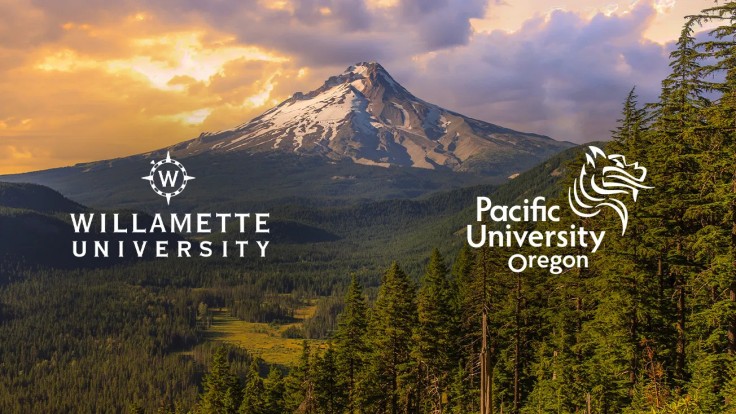
Two of Oregon's oldest and most established universities have signed a letter of intent to merge, creating what would be the state's largest private institution with more than 6,000 students spread across four campuses—a bold attempt to preempt the demographic and financial pressures that have already forced multiple Oregon colleges to close permanently.
Willamette University, founded in Salem in 1842 as the oldest university in the western United States, and Pacific University, established in Forest Grove twelve years later, announced Thursday they plan to combine into a new entity tentatively named the University of the Northwest.
If approved by federal and state regulators—a process expected to take at least two years—the merger would represent a "defining moment for private higher education in the region," according to Willamette President Steve Thorsett, bringing together institutions that have educated generations of Pacific Northwest leaders under a shared administrative structure while maintaining their historic identities.
But the merger announcement also underscores the extraordinary pressures facing small private liberal arts colleges across America, where declining birth rates, skepticism about college value, rising costs, and shifting workforce demands are creating an existential crisis that experts warn will result in widespread closures and consolidations over the next decade.
The Enrollment Cliff: A Demographic Time Bomb
The urgency behind the Willamette-Pacific merger stems from what higher education analysts call the "enrollment cliff"—a sharp anticipated decline in college-age students beginning in 2025, driven by plummeting birth rates during the 2007-2009 Great Recession.
According to CDC data and higher education forecasts, U.S. fertility rates dropped nearly 23% during the recession. Those missing babies would have been turning 18 and entering college starting this year. The result: significantly fewer high school graduates, intensifying competition for a shrinking pool of potential students, and devastating financial consequences for institutions that can't attract or retain enrollment.
Oregon's situation is particularly acute. Only 53% of the state's class of 2022—the most recent year for which data is available—enrolled in a college, university, or post-secondary training program within a year of graduating high school, according to state data. That's down from historical norms and reflects nationwide trends of declining confidence in higher education's value proposition.
For small private institutions charging $70,000+ annually, convincing students and families that a liberal arts degree justifies the investment has become increasingly difficult—particularly when state universities and community colleges offer similar degrees at fractions of the cost, and when high-paying technology jobs often don't require four-year degrees at all.
"There are a lot of headwinds right now that are pushing against us in higher education," Pacific President Jenny Coyle acknowledged. "We view this as a really interesting, forward-thinking strategic platform where we can combine our resources and we can navigate change and things that are coming at us that we might not have expected, and to really be able to adapt quicker and provide what the region needs."
'Act While You Still Have Strength'
Both presidents insisted the merger isn't driven by immediate financial crisis—a claim supported by their balanced budgets and Willamette's $306 million endowment, though observers note that institutions in genuine distress rarely admit it publicly until collapse is imminent.
Willamette did face budget pressures in 2024, cutting $2 million including reduced retirement contributions for employees, after enrollment came in lower than expected due partly to the botched federal rollout of the new FAFSA financial aid form. But enrollment has grown for five consecutive years, Thorsett said, and both universities currently run balanced budgets.
The distinction they're drawing—merging from a position of relative strength rather than waiting for crisis—reflects advice from higher education consolidation experts about when mergers succeed.
"You're in the best position to effect a merger when your institution still has some strength to it," said Donald Heller, a consultant with Higher Ed Consolidation Services. "Unfortunately, many institutions, and the boards and the presidents of these institutions, don't think about a merger until it's too late."
Heller's warning carries particular weight in Oregon, which has watched multiple private colleges close in recent years: Concordia University, Marylhurst University, and the Oregon College of Oriental Medicine all shut down permanently, leaving students scrambling, employees jobless, and communities without institutions that had served them for decades.
Thorsett emphasized that the Willamette-Pacific merger represents something different from typical distressed consolidations.
"The thing that is just different about this compared to almost any other merger going on at the moment nationally is that it is not a small failing institution or an institution that's concerned about its sustainability merging into a bigger institution," he said. "This is a merger of two equals. We believe that Oregon deserves a great private university, a university that the rest of the country can look at as a model for what could be built elsewhere."
The 'Collegiate University' Model
The proposed structure would operate as a "collegiate university"—think Oxford or Cambridge in England, where individual colleges maintain distinct identities while sharing resources and administration.
Under this model:
Separate Campuses Retained: Willamette's campuses in Salem and Portland (home to Pacific Northwest College of Art, which merged with Willamette in 2021), and Pacific's campuses in Forest Grove and Hillsboro would all continue operating.
Individual Identities Preserved: Each undergraduate college would keep its name, campus culture, and distinct character. The Willamette Bearcats and Pacific Boxers would maintain separate athletic programs through the NCAA, continuing their longstanding rivalry.
Independent Admissions: Each college would set its own admissions standards and processes, maintaining flexibility to target different student populations.
Unified Administration: Shared administrative functions—finance, IT systems, databases, fundraising, governmental relations—would be consolidated to reduce duplication and costs.
Cross-Registration Benefits: Students at any campus could access courses and programs at the others, dramatically expanding options without requiring physical relocation.
Combined Graduate Programs: The schools' complementary graduate offerings—Willamette's law school, graduate business program, and data science programs; Pacific's health professions, optometry, and education programs—would be accessible to students from either institution.
"There will still be Boxers; still be Bearcats," Coyle said. "We've already spoken with the NCAA; we're in the same athletic conference, and it's important that we continue to be competitors."
Diplomas issued after the merger would carry the University of the Northwest name but also identify which specific college granted the degree, ensuring the Willamette and Pacific brands endure.
The Financial Reality: $70,000+ Tuition and Declining Value Perception
The merger occurs against a backdrop of staggering tuition costs that make private liberal arts education increasingly inaccessible to middle-class families.
Pacific's annual cost for tuition and residential fees: $77,542 Willamette's annual cost: $71,254
While many students receive financial aid that reduces these sticker prices, the published costs alone can deter applications from families who assume they can't afford such institutions, even if need-based aid would make them affordable.
These price points also invite brutal comparisons: Four years at Pacific costs over $300,000—enough to buy a house in many Oregon communities, or to fund a business startup, or to invest in index funds that might generate retirement security.
The value proposition becomes harder still when graduates face uncertain job markets, student loan burdens that delay homeownership and family formation, and evidence that many high-paying careers—particularly in technology—don't require traditional four-year degrees.
"Each of us has been looking at [ways] to make it possible for students to move faster and spend less money on their degrees, and to focus on that college to career pathway," Thorsett said. "This transaction would give us a chance to center that in the conversation in an even higher profile way."
The merged institution plans to emphasize accelerated degree programs, integrated internships, and direct connections to major regional employers like Nike, Intel, and Boeing—transforming from traditional liberal arts model toward hybrid career preparation/liberal education approach.
Whether this repositioning can reverse declining enrollment remains to be seen, but the strategy reflects recognition that pure liberal arts education, divorced from clear career pathways, faces increasingly skeptical markets.
The S&P and Moody's Warnings
The merger announcement came just days after S&P Global Ratings issued a negative outlook for private nonprofit colleges, citing enrollment competition, rising personnel costs, and "unprecedented federal policy changes" as threats to institutional sustainability.
That forecast followed a similarly pessimistic November assessment from Moody's Ratings covering the entire higher education sector.
These credit agency warnings aren't abstract predictions—they affect universities' borrowing costs, donor confidence, and accreditation standing. When Moody's or S&P downgrades the sector, it signals to financial markets that small private colleges face elevated default risks on bonds and loans.
"The announcement comes on the heels of a poor forecast for private, non-profit colleges from S&P Global Ratings," observers noted, with the timing suggesting both universities recognize the window for proactive merger may be closing as financial conditions deteriorate.
Coyle framed the merger as future-proofing against these headwinds: "It's about looking ahead to make sure we can be strong and sustainable as we look ahead to the next 100 years of Willamette, Pacific and PNCA."
What Students and Faculty Can Expect
For current students, the merger means expanded options. A Pacific student interested in law school could more easily transition into Willamette's law program. A Willamette student pursuing health professions could access Pacific's optometry school.
Cross-registration would allow students to take specialized courses unavailable on their home campus, creating the academic diversity typically available only at much larger universities.
For faculty, the situation is more ambiguous. Both presidents said there are no current plans for layoffs or program reductions, but Thorsett acknowledged "things could look different down the road"—standard hedging that offers little reassurance to employees worried about job security.
Typically, mergers generate cost savings through administrative consolidation: duplicate positions in finance, HR, IT, communications, and advancement get eliminated. While presidents promised no immediate cuts, efficiency gains are explicitly part of the merger rationale.
The two-year regulatory approval process provides time for gradual adjustments, but faculty members at merged institutions often face reduced course offerings, increased teaching loads, or early retirement packages designed to shrink payrolls without formal layoffs.
Oregon's Broader Higher Education Crisis
The Willamette-Pacific merger reflects Oregon's particular higher education challenges. The state has relatively low bachelor's degree attainment compared to national averages, with only 53% of high school graduates continuing to post-secondary education.
This creates a vicious cycle: Fewer Oregon students attend college, reducing demand for in-state institutions, forcing schools to recruit heavily from out-of-state (where competition is fierce), or to close/consolidate when they can't attract sufficient enrollment.
Oregon State Representative Ben Cannon, executive director of the state's Higher Education Coordinating Commission, supported the merger: "At a time when increased investment and innovation in all sectors of higher education is crucial for our state's economic future, I appreciate the bold approach Willamette and Pacific are taking to meet the moment."
But the merger also highlights the state's failure to make higher education more affordable or to convince residents of its value. If two historic, respected institutions with good reputations feel compelled to merge to survive, what does that say about Oregon's higher education ecosystem?
The National Context: Small Colleges Under Siege
College mergers and closures have accelerated nationwide over the past decade, with the pace quickening as demographic pressures intensify.
According to the State Higher Education Executive Officers Association's analysis of college mergers, financial shortfalls, declining enrollment, and service streamlining are the most common consolidation drivers.
Small liberal arts colleges face particular vulnerability:
- They lack the research funding that sustains large universities
- They can't compete on price with state schools
- They don't offer the career-focused programs that for-profit and community colleges emphasize
- They depend heavily on tuition revenue, making enrollment declines immediately catastrophic
- Their endowments, while sometimes substantial, typically can't sustain operations indefinitely
The result is a steady drumbeat of closures and mergers: Iowa Wesleyan closed in 2023 after 181 years. Mills College merged with Northeastern University. Medaille University closed. Presentation College closed. The list grows longer each year.
Experts predict the 2020s will see hundreds of small college closures as the enrollment cliff's full impact materializes. Some states may lose dozens of institutions, leaving educational deserts where residents lack access to nearby four-year degrees.
The Long Road Ahead
The letter of intent signed by Willamette and Pacific boards is just the beginning. Over the next two years, the institutions must:
- Negotiate detailed merger agreement covering governance, finances, academic programs, employee contracts, and countless operational details
- Secure approval from the U.S. Department of Education
- Obtain Oregon state regulatory approval
- Win accreditation agency blessing from the Northwest Commission on Colleges and Universities
- Engage faculty, students, staff, alumni, and donors to build support
- Develop integrated systems for IT, finance, admissions, registration, and other functions
- Create joint academic programs and cross-registration mechanisms
- Resolve any legal or contractual obstacles
Any of these steps could derail the merger. Faculty votes of no confidence, donor revolts, regulatory rejection, or discovery of incompatible systems or cultures could doom the project.
But if successful, the University of the Northwest would become Oregon's largest private institution, with 6,000 students, four campuses, law and business schools, health sciences programs, an art college, and a combined alumni network of 73,000—scale that neither institution could achieve alone.
Whether that scale proves sufficient to navigate the enrollment cliff and financial headwinds facing higher education remains uncertain. What's clear is that Willamette and Pacific believe their survival depends on joining forces rather than competing as Oregon's college-age population shrinks and the value of expensive liberal arts degrees faces mounting skepticism.
For students considering Oregon colleges, the merger sends mixed signals: It demonstrates institutional foresight and planning, but also reveals the fragility of small private institutions that feel compelled to consolidate even when they claim financial health.
And for the countless small colleges across America watching Oregon's two oldest universities merge to survive, the message is sobering: The enrollment cliff is real, the threats are existential, and waiting too long to adapt may mean closing permanently rather than finding partners for strategic consolidation.
The Willamette Bearcats and Pacific Boxers may continue their athletic rivalry, but their institutions have concluded that cooperation, not competition, offers the best path forward through higher education's demographic winter.
© 2026 University Herald, All rights reserved. Do not reproduce without permission.


