Indiana’s Only Black Institution Martin University Closes After 48 Years, Leaving First-Generation Students With No Alternatives
By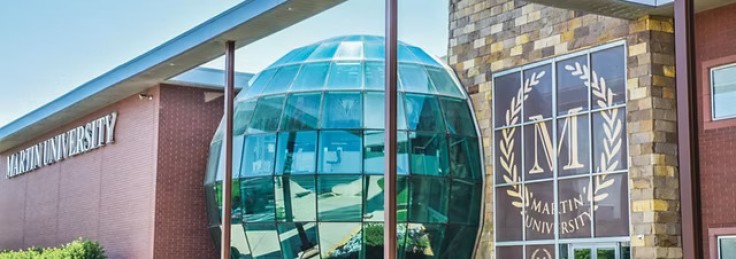
Martin University, Indiana's only Predominantly Black Institution of higher education and a 48-year lifeline for low-income, first-generation college students in Indianapolis, will suspend all operations on December 13—leaving 164 students scrambling to complete degrees and community leaders mourning the loss of an institution that served the city's most vulnerable learners.
The Board of Trustees announced the "pause" in operations Tuesday, citing crushing financial challenges, enrollment collapse, and the absence of any endowment to cushion the blow. While university officials carefully avoided calling it a permanent "closure," stating that discussions continue about carrying forward Martin's mission, higher education experts and community members recognize the grim reality: institutions that pause operations rarely reopen.
"To see Martin University go would be an atrocity for the state of Indiana," State Representative John L. Bartlett, a Democrat from Indianapolis who previously served as board chair for Martin University and earned his degree there in 2010, told local media. "This is directly out of [President] Trump and Gov. Braun's agenda."
The closure, effective at the end of the current fall semester, represents not just the loss of a university but the elimination of Indiana's only predominantly Black institution—a designation separate from Historically Black Colleges and Universities (HBCUs) because Martin was founded after the 1964 cutoff date for that federal classification.
For students like psychology majors preparing to graduate in May, the news delivered just weeks before final exams represents a devastating disruption to carefully laid plans.
"It's going to affect me drastically," one student told WISH-TV. "If there's no way to fix our outcome for us so we can continue to graduate, therefore we will have to apply to other schools."
A Mission Born From Civil Rights
Martin University's story began in 1977 when Boniface Hardin and Jane Edward Schilling founded what was originally called Martin Center College. The institution grew organizationally out of the Martin Center, a nonprofit human services agency, with a specific mission: serve low-income, minority, and adult learners who had few other options.
The university's name honored two figures committed to racial justice: civil rights movement leader Martin Luther King Jr. and St. Martin de Porres, the 16th-17th century Peruvian saint who worked to achieve racial harmony and is considered the patron saint of mixed-race people.
From its campus at 2186 North Sherman Drive on Indianapolis's near southeast side, Martin University carved out a unique niche in Indiana higher education. While the state has dozens of colleges and universities, none specifically targeted the population Martin served: working adults, often with families, who needed flexible schedules, affordable tuition, and supportive services like on-campus childcare to pursue degrees while balancing jobs and family responsibilities.
"It just gives us an opportunity to do things. People that come from the hood, the neighborhoods, the low poverty...we need this," student Sasha Ashmore told WISH-TV. "So if we can get any help to keep Martin University open...I'm also a student that wants to go back for my master's degree."
Sasha Townsend, another student, highlighted the critical role of Martin's childcare services: "With them closing their doors, and not offering any more classes in the spring, it will affect me and my child. It's very flexible that I can bring my child with me."
The Numbers Tell a Devastating Story
Federal data paint a picture of an institution struggling long before its final closure announcement:
Enrollment: Just 164 undergraduate students—a catastrophically low number for any university Financial Need: 75% of students receive income-based Pell grants (maximum family income typically under $60,000) Graduation Rate: 15%—among the lowest for any accredited US institution Endowment: $0—no financial cushion whatsoever Annual Cost: Approximately $13,500 after Martin lowered tuition in 2023 to improve accessibility
The low enrollment meant fixed costs—buildings, utilities, administrative staff, accreditation fees—were spread across too few students paying tuition. At 164 students paying roughly $13,500 annually, gross tuition revenue would total approximately $2.2 million—barely enough to cover basic operations, let alone faculty salaries, student services, facilities maintenance, and the myriad costs of running an accredited university.
The 15% graduation rate, while alarming on paper, reflects Martin's student population rather than necessarily indicating institutional failure. Non-traditional adult learners—students balancing work, family, and education—face completion barriers that traditional 18-22-year-old residential students don't encounter. Job losses, family emergencies, childcare disruptions, and financial crises can derail degree completion even when students desperately want to finish.
But low graduation rates create a vicious cycle: prospective students see the numbers and choose other institutions, enrollment drops further, financial pressures intensify, and institutional capacity to support struggling students deteriorates.
The State Funding Fight
The proximate cause of Martin's closure can be traced to state budget decisions in 2025.
Former Governor Eric Holcomb had provided Martin University with $5 million in one-time funding in the 2023-2025 budget cycle—a lifeline that kept the struggling institution afloat during the COVID-19 pandemic's aftermath and its continued enrollment challenges.
When Governor Mike Braun proposed his 2025 budget, Martin University was conspicuously absent. The $5 million in state support—representing a substantial portion of the university's total operating budget—simply disappeared.
Community members and lawmakers raised alarm bells immediately. Protests and advocacy efforts followed, with supporters demanding Braun meet with Martin leadership and reconsider the funding elimination.
Braun eventually visited Martin University and met with community members, but ultimately, his budget did not include any funding for the institution. In February, Braun explained that Martin still had approximately $1.5 million remaining from the previous grant and suggested he'd planned on supporting Martin in creating more workforce-focused degrees and programs—essentially offering potential future support contingent on institutional changes while eliminating existing support.
For an institution with just 164 students, no endowment, and already teetering on financial collapse, losing $5 million in annual state support while being told to restructure curriculum was an impossible calculus.
Representative Bartlett's statement connecting Martin's closure to "Trump and Gov. Braun's agenda" reflects widespread perception among progressive advocates that small institutions serving primarily low-income Black students are being systematically defunded while resources flow to workforce training programs and institutions with politically connected leadership.
The President's Departure
Adding to Martin's instability, President Sean Huddleston stepped down effective November 28, 2025—just eleven days before the closure announcement—after six years leading the institution.
Board Chairman Joseph Perkins praised Huddleston's efforts, noting he "worked tirelessly" up to his last day exploring ways to keep Martin open. Huddleston officially left "to pursue other opportunities," though the timing suggests he recognized the university's situation was unsalvageable.
Losing institutional leadership weeks before a closure announcement is rarely coincidental. Presidents typically depart troubled institutions either because they've exhausted all options and see no path forward, or because boards want to make changes but discover the underlying problems are structural rather than leadership-related.
Martin had also planned to launch a fully online campus in early 2026—an expansion that might have attracted students beyond Indianapolis and provided enrollment growth to offset declining on-campus numbers. That plan is now presumably dead alongside the institution itself.
Students Left in Limbo
For the 164 currently enrolled students, the closure announcement creates immediate crises:
December Graduates: Students scheduled to complete degrees in December will presumably receive diplomas as planned, though questions remain about institutional support for transcripts and credential verification once operations cease.
May Graduates: Students on track to finish in spring 2025 face the worst situation. They're months from completion but won't have a spring semester to finish required courses. Will they transfer to other institutions and complete there? Will Martin arrange teach-out agreements with other schools? Will their credits even transfer?
Earlier-Stage Students: Those with two or three years remaining face starting over or transferring with uncertain credit acceptance. Will Indiana universities accept Martin's credits? What about students in specialized programs like addiction counseling or urban ministries that aren't widely offered elsewhere?
Financial Aid: Students receiving Pell grants will presumably be able to use those funds at other institutions, but what about Martin-specific scholarships or aid packages? Do those simply disappear?
Childcare: Students like Sasha Townsend who relied on Martin's on-campus childcare to make education possible will need to find alternative arrangements—an expense and logistical challenge that may force some to abandon degree pursuits entirely.
Community Ties: Adult learners often choose institutions near home and work. Transferring to other Indianapolis universities may require different schedules, longer commutes, or programs that don't accommodate working adults' needs.
Martin representatives stated that "clear degree completion options will be provided to all students as soon as they're confirmed" and that students will "continue to have access to their transcripts." But as of the closure announcement, no specific teach-out agreements or completion pathways had been publicly identified.
The uncertainty itself becomes an obstacle. Students facing spring semester need to register at other institutions now, apply for financial aid, arrange schedules, and make childcare and work arrangements—but they can't do that without knowing what credits will transfer and what programs will accept them.
What Happens to Indiana's Only Black Institution?
The designation of "Indiana's only Predominantly Black Institution" carries significant weight beyond demographics.
HBCUs and PBIs serve essential functions in American higher education. They graduate disproportionate percentages of Black professionals—including teachers, nurses, social workers, and community leaders who return to serve their communities. They create campus environments where Black students aren't tokenized or isolated. They maintain institutional cultures that understand first-generation students' challenges and systemic barriers facing low-income families.
When Martin University closes, Indiana loses its only institution specifically designed to serve these populations. Yes, other Indiana universities enroll Black students, but none were founded with that mission, none structure programs specifically around the needs of low-income adult learners, and none can replace Martin's role in Indianapolis's Black community.
State Representative Gregory Porter, a Democrat from Indianapolis, emphasized the gravity of Martin's pause: "The key word is pause, and we hope we can get our act together as a city and as an institution to move forward to continue to give first generation students the opportunity to go to school, and help non-traditional students and for the students who have some college to go back."
The optimism about resurrection seems misplaced given higher education's historical precedent. Small private institutions that close due to financial collapse rarely reopen. The infrastructure disperses, accreditation lapses, faculty and staff find other employment, students transfer elsewhere, and the institutional knowledge and culture that made the place unique simply evaporates.
The National Context: Small College Apocalypse
Martin University's closure fits a troubling national pattern. Small private institutions, particularly those serving low-income students without substantial endowments, are facing existential pressures:
Enrollment Demographics: The "enrollment cliff"—declining numbers of college-age students due to birth rate drops following the 2008 recession—is hitting hardest at institutions that can't be selective.
Financial Aid Challenges: Students who would benefit most from higher education often can't afford it even with Pell grants, while institutions struggle to provide additional aid.
Competition: Online programs, community colleges, and workforce training alternatives are luring students away from traditional four-year degrees.
Outcome Pressures: Low graduation rates and weak employment outcomes trigger federal scrutiny, accreditation warnings, and reputational damage that further reduces enrollment.
COVID Aftermath: The pandemic devastated enrollment at institutions serving non-traditional adult learners, many of whom dropped out due to job losses, family crises, or childcare disruptions and never returned.
Martin checked every box on the vulnerability list: small, private, no endowment, serving primarily low-income students, low graduation rates, enrollment collapse, and loss of state funding. The wonder isn't that it closed, but that it survived as long as it did.
The Political Dimension
Representative Bartlett's statement blaming "Trump and Gov. Braun's agenda" reflects bitter political divisions over higher education funding priorities.
Conservative policymakers, including Braun, have emphasized workforce development, practical job training, and "return on investment" metrics for higher education spending. From this perspective, universities with 15% graduation rates and unclear employment outcomes for graduates represent poor uses of taxpayer funds.
Progressive advocates counter that education's value extends beyond immediate job placement, that institutions serving disadvantaged populations face structural challenges that simplistic metrics don't capture, and that eliminating the only institution serving Indiana's Black community represents abandonment of equity commitments.
The Trump administration's broader higher education policies—funding freezes for universities over antisemitism allegations, diversity program elimination, and "merit-based" funding priorities—create a national context where small institutions serving primarily minority students feel targeted.
Whether Martin's closure stems from deliberate policy choices to defund such institutions or from broader enrollment and financial trends that would have doomed the university regardless of state support depends largely on political perspective. What's undeniable is that state funding elimination accelerated the timeline, with the university unable to survive even one budget cycle without that support.
Last-Ditch Fundraising
Martin University has launched a donation campaign seeking community support to sustain operations through December. Board Chairman Perkins's statement emphasized that "A primary need of Martin's is for more community support. This includes funding for its vast first-generation college students who are fighting courageously to make a better life for their families."
The request for donations to fund operations "through December" itself signals the desperate situation. Universities typically operate on budgets planned years in advance. When you're asking for donations to make it through the current month, institutional collapse is essentially complete.
The December fundraising timeline also suggests the university is attempting to:
- Pay faculty and staff through semester's end
- Complete fall semester obligations to students
- Maintain facilities until students leave campus
- Fund administrative operations needed for transcript production and student support during transition
Whether the community can or will provide sufficient funding remains unclear, though the broader question is what purpose such funding serves if operations are pausing regardless. Keeping the lights on for three additional weeks doesn't solve the underlying enrollment and revenue problems that made closure inevitable.
The Last Days
Martin University's last day of classes is Friday, December 13, 2025. After 48 years of operation, that's how it ends—not with celebration or ceremony, but with scrambling students, uncertain faculty, and community members mourning the loss of an institution that served people and populations that larger, wealthier universities often overlook.
Alumni President Dwight A. McGill Sr. issued a statement acknowledging the pain: "I'm writing to share news that weighs heavily on many of us who hold Martin University close to our hearts. The Board of Trustees has announced a 'pause' in university operations effective Friday, December 12."
For the students, faculty, staff, and community members who invested in Martin's mission, the "pause" language offers little comfort. They understand that in higher education, pausing operations is almost always permanent.
"I would hate to see it go. I hope there is something that can be done, whatever can be done," student Sasha Townsend told reporters, capturing the helpless hope of a community watching something precious slip away despite desperate wishes otherwise.
Indiana's only Predominantly Black Institution, founded to serve those the state's other universities too often ignored, will close its doors in days. The question now isn't whether Martin University will reopen, but what will fill the void it leaves—and whether anyone will bother trying.
© 2026 University Herald, All rights reserved. Do not reproduce without permission.


