Two Years After the Encampments, Campus Antisemitism Is More Diffuse — and More Entrenched
A New Brandeis University Survey of Nearly 4,000 Students at 303 Colleges Finds That 47% of Jewish Students Have Experienced Prejudice Because of Their Identity — While a Senior Hillel International Official Warns the Problem Has Migrated Online and Into Campus Culture, Not Disappeared
By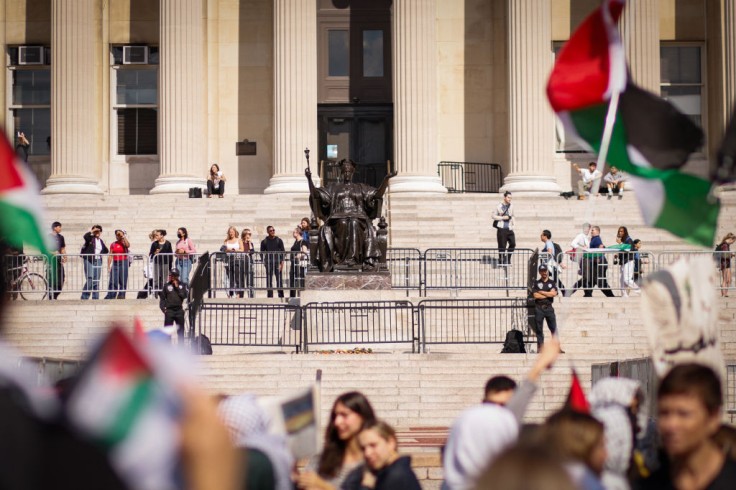
Two years after pro-Palestinian encampments swept more than 100 American college campuses, a comprehensive new study and a candid assessment from one of higher education's most prominent Jewish student support organizations paint a picture that is neither reassuring nor simple: antisemitism at American universities has not improved in any meaningful sense. It has adapted.
The Cohen Center for Modern Jewish Studies at Brandeis University published a report this month titled "Antisemitism and Prejudice on Campus," based on a survey of nearly 4,000 undergraduate students at 303 four-year colleges and universities conducted between October 2025 and January 2026 — the first academically rigorous national survey to assess campus antisemitism and prejudice against other minority groups simultaneously. The findings are sobering, nuanced, and in several ways challenge the political frameworks that have dominated the debate.
What the Brandeis Study Found
Nearly half of Jewish students — 47% — reported experiencing some form of prejudice on campus because of their Jewish identity. According to the report's authors, much of this figure came from Jewish students' higher reported rate of exposure to graffiti and posters with offensive content.
But Jewish students are not alone. In addition to 47% of Jewish students, 34% of Muslim students, 31% of Black students, and 22% of Asian students reported experiencing at least one form of prejudice on campus because of their identity.
The study found that a substantial minority of students, across ideological, racial, ethnic, and religious identity lines, hold views that are likely to be seen as prejudicial by members of minority groups. Researchers found 17% of students were likely to hold views expressing anti-Black resentment, 9% held hostile views about Jews, 15% held views about Israel that most Jews find antisemitic, and 4% held hostile views toward multiple religious and racial minority groups including Jews.
The report makes clear that campus antisemitism is not a single phenomenon with a single source. Jewish students on campus expressed concerns about antisemitism from both the political right and the political left, about antisemitism related to Israel, and about antisemitism expressed as traditional anti-Jewish stereotypes.
The political dimension of these findings is particularly significant given the current moment. The Trump administration's investigations into campus antisemitism have resulted in time-consuming litigation for colleges, but the report suggests that Jewish students don't feel more protected by one side of the political spectrum than the other — 22% said they were very concerned about antisemitism coming from the political left and 25% were very concerned about it coming from the right.
One of the report's most counterintuitive findings concerns the relationship between anti-Israel views and antisemitism. The report found that strident hostility toward Israel — opposing Israel's right to exist and avoiding peers who support a Jewish state — did not neatly correlate to holding antisemitic views. Half of "extremely liberal" students agreed with those statements about Israel, but overall the very liberal population was least likely to express a pattern of hostility toward Jewish students. Very few moderate or conservative students expressed those negative views about Israel, but both groups were more likely to agree with anti-Jewish statements.
Muslim, Black, and Hispanic students, and those who identified as liberal or moderate, were the most likely to agree with negative statements about Jews, while white, Muslim and conservative students were most likely to agree with anti-Black views.
Leonard Saxe, director of the Cohen Center who co-authored the report, described the overall climate this way: "Everybody is walking around with a chip on their shoulder. Addressing prejudice toward protected groups is perhaps seen as a zero-sum game: 'If we pay attention to Black students that's taking away from what we can do for Jewish students, but paying attention to Jewish students means not paying attention to Muslim students.'"
The Hillel View: Antisemitism Has Migrated, Not Disappeared
Writing this week in the Jewish Telegraphic Agency, Jonathan Falk — senior vice president for campus solutions at Hillel International — offered one of the most frank assessments yet of what the two years since the encampments have taught the Jewish student support community.
"Some things have improved. Some campuses are less visibly chaotic. Some interventions have worked. But the encampments were never the whole story. They were one highly visible expression of a deeper problem — a problem that did not leave when the tents did," Falk wrote.
Falk described how antisemitism on campus has shifted in form: "The hatred did not disappear after the encampments — it migrated. More than half of what Jewish students experience now shows up online: in posts, anonymous messages, group chats, and the steady churn of conspiracy and incitement. A campus can look calmer and still be deeply unhealthy."
He also identified two specific developments he argues have accelerated the problem. The first is what he calls the normalization of Holocaust inversion — the framing of Jews or the Jewish state as the new Nazis, which he describes as "a way of weaponizing Jewish memory against Jews, draining the Holocaust of its meaning while recasting Jewish identity as uniquely suspect." The second is the campus dynamics around the Boycott, Divest, Sanctions movement. Falk argues that when BDS campaigns come to campus, antisemitism reliably increases not only at the final vote, but throughout the campaign itself, which he says "stigmatizes Jewish students and isolates Jewish voices long before any resolution passes."
His central argument is that the encampments revealed a climate problem, not merely a conduct-management problem: "If a school removes tents while leaving the ideas and norms that enabled them untouched, then that is not a solution, it is a surface repair."
What Actually Works — and the Limits of Federal Intervention
Both the Brandeis study and Falk's analysis converge on similar conclusions about what interventions do and don't work.
Clear rules, consistently enforced, matter — but they are not sufficient. Falk describes a shift in the nature of requests his team now receives from Hillel professionals on campuses: fewer urgent alerts about immediate chaos, more questions about "the quieter, more entrenched problems: the hostile syllabus, the student group that got excluded from a coalition, the administrator who didn't know how to respond and didn't ask."
The Brandeis report recommends that antisemitism interventions be targeted to specific groups rather than deployed as one-size-fits-all programs, because the distinct forms of antisemitism that appear in the data — Israel-related hostility, traditional stereotypes, and ideologically driven hostility — come from different student populations with different underlying motivations and respond to different educational approaches. The report explicitly challenges "contemporary discourse" that suggests "fighting antisemitism requires cracking down on pro-Palestinian protesters and proponents of DEI" or that "protecting Muslim and Black students from prejudice requires standing up to the 'weaponization' of antisemitism." Instead, the report calls for "an effort that promotes empathy and civic discourse" as a more productive approach.
The Trump administration's approach — federal funding threats, Title VI investigations, and the March 2026 DOJ lawsuit against Harvard — has produced contested legal battles but has not yet produced measurable improvement in the campus climate for Jewish students. The Brandeis data, collected from October 2025 through January 2026, reflects a period after more than a year of Trump administration enforcement pressure; the persistence of the 47% figure suggests that enforcement pressure alone has not changed the underlying campus environment.
What This Means for Students
For Jewish students on campus right now: the Brandeis data confirms what many have described anecdotally — that antisemitism is real, widespread, comes from multiple directions on the political spectrum, and often goes unrecognized by non-Jewish peers. As Saxe told Jewish Insider: "Many Jewish students experience hostility that, by and large, is not recognized by non-Jews. Notably, the pattern is similar for members of other ethno-religious and racial groups."
Students experiencing antisemitic harassment or discrimination on campus can report incidents to their institution's bias response team, file a complaint with the Department of Education's Office for Civil Rights, or contact Hillel International or the Anti-Defamation League's Campus Affairs division for support and documentation guidance.
For students from other minority groups — Muslim, Black, Asian, or Hispanic — the Brandeis study's finding that significant proportions of those communities are also experiencing campus hostility points to a shared interest in the kind of campus climate work that addresses prejudice as a systemic problem rather than a competition between groups for institutional attention.
For university administrators, faculty, and board members, the combined weight of the Brandeis data and the Hillel analysis presents a clear challenge: the visible confrontations of spring 2024 have subsided, but the underlying climate that produced them has not. The path forward, as both sources suggest, runs through education, consistently enforced community standards, and genuine investment in what makes students of all backgrounds feel they belong.
© 2026 University Herald, All rights reserved. Do not reproduce without permission.


