14 US Colleges Get 'F' Grades for Antisemitism as 83% of Jewish Students Report Experiencing Hate
Harvard Climbs From 'F' to 'C' in Antisemitism Grades as Columbia, Yale Remain at Bottom
By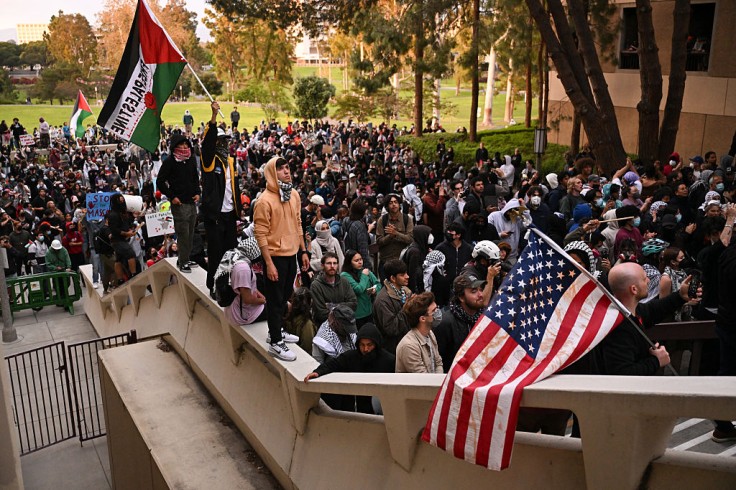
Fourteen American universities have received failing grades for their handling of antisemitism on campus, according to the Anti-Defamation League's second annual Campus Antisemitism Report Card released in March 2025—a comprehensive assessment that reveals Jewish students continue facing hostility and harassment despite some institutional improvements.
The expanded 2025 report card evaluated 135 colleges and universities, up from 85 in 2024, assigning letter grades based on 30 criteria spanning administrative policies, campus climate, and Jewish student life. The results paint a mixed picture: while 45% of previously assessed schools improved their grades and more than half have enacted major policy changes, antisemitic incidents remain alarmingly common and most Jewish students still don't feel safe on campus.
Only eight universities earned A grades for exceptional performance in combating antisemitism, while 14 institutions—including Pomona College, Portland State University, and the University of California, Santa Barbara—received failing marks for inadequate policies and high incident rates.
The report comes as campus tensions over the Israel-Hamas war continue roiling American higher education, with 83% of Jewish students surveyed by ADL reporting they experienced or witnessed antisemitism in the past academic year.
The 14 Schools That Failed
The universities receiving F grades in the 2025 report card represent diverse institutional types—public and private, large research universities and small liberal arts colleges—united by their failure to adequately protect Jewish students from harassment and hate:
California Polytechnic State University DePaul University (Chicago) Evergreen State College (Washington) Haverford College (Pennsylvania) Loyola University New Orleans Pitzer College (California) Pomona College (California) - declined from passing grade in 2024 Portland State University (Oregon) Scripps College (California) University of California, Santa Barbara - declined from passing grade in 2024 University of California, Santa Cruz University of Minnesota University of Massachusetts Amherst University of San Francisco
Several schools experienced significant grade deterioration. UC Santa Barbara and Pomona College both dropped to F grades from passing marks in 2024, suggesting campus climate worsened considerably as Israel-Hamas war tensions intensified.
Portland State University faced particular scrutiny after violent confrontations between pro-Palestinian protesters and police in spring 2024, with Jewish students reporting feeling unsafe amid extended campus occupations.
DePaul University, the largest Catholic university in the United States, responded to its failing grade by stating: "We are disappointed by the ADL's assessment. At DePaul University, we condemn antisemitism in all its forms and will continue to stand firm in doing so, in line with our values." The university requested a meeting with ADL to better understand the grading criteria and hear suggestions for improvement.
Haverford College similarly said it "always welcome[s] constructive critique so that we can provide an educational environment in which all students have the opportunity to thrive."
The Eight Schools That Excelled
In contrast, eight institutions received A grades for exceeding expectations in protecting Jewish students, maintaining robust Jewish campus life, and preventing or effectively addressing antisemitic incidents:
Brandeis University (Massachusetts) - also received A in 2024 Brooklyn College, CUNY (New York) Elon University (North Carolina) - also received A in 2024 Florida International University (Florida) Queens College, CUNY (New York) University of Alabama University of Miami (Florida) Vanderbilt University (Tennessee)
Brandeis President Ron Liebowitz emphasized his institution's historical commitment: "From its beginning, Brandeis has been open to all qualified individuals and has opposed hate toward other groups; our founders knew that hate often begins but rarely ends at antisemitism. We are proud that the ADL recognizes our continued support for our Jewish students, faculty and staff."
The A-grade schools share common characteristics: clear policies consistently enforced, mandatory or widely available antisemitism education, robust bias reporting systems, strong relationships with Jewish campus organizations like Hillel and Chabad, and swift administrative responses to incidents.
Several institutions improved dramatically after the initial 2024 report card. Arizona State University, Purdue University, and the University of Georgia were upgraded to A grades after implementing new policies and programs specifically in response to their initial lower scores—demonstrating that the report card can drive meaningful change.
How the Ivy League Fared
America's most prestigious universities received decidedly mixed grades, with no Ivy League institution earning better than a B:
Dartmouth College: B (up from C in 2024) - highest among Ivies Brown University: C (up from D) Cornell University: C (up from D) Harvard University: C (up from F in 2024) University of Pennsylvania: C (up from D) Columbia University: D (unchanged from 2024) Princeton University: D (down from C) Yale University: D (down from C)
Harvard's improvement from F to C represents the most dramatic Ivy League change, though it occurred against the backdrop of unprecedented turmoil. Former President Claudine Gay resigned in January 2024 following congressional testimony widely criticized as evasive on antisemitism questions, and the university settled major lawsuits alleging it failed to protect Jewish students from harassment.
A Harvard spokesperson said: "Antisemitism has no place in the Harvard community. We remain steadfast in our commitment to combating antisemitism and hate, in whatever form it manifests itself."
Columbia's persistent D grade reflects ongoing challenges despite substantial policy changes. The university became the epicenter of campus protests in spring 2024, with extended encampments, building occupations, and confrontations between pro-Palestinian demonstrators and Jewish students that drew national attention and congressional investigation.
Princeton and Yale's decline from C to D grades suggests worsening campus climates as war tensions persisted through the 2024-25 academic year.
The Ivy League's collective weakness on antisemitism protection stands in stark contrast to its academic prestige, raising uncomfortable questions about whether elite institutions prioritize campus climate and student safety as highly as research output and rankings.
The 30 Criteria: How Schools Are Judged
The ADL's assessment methodology evaluates universities across three categories:
Administrative Policies and Actions (10 criteria):
- Has the university adopted IHRA definition of antisemitism?
- Are there clear policies on demonstrations and protests?
- Has the university mandated or offered antisemitism education?
- Are there robust bias reporting mechanisms?
- Has the university disciplined students/faculty for antisemitic conduct?
- Does the university have a chief diversity officer focused on combating antisemitism?
- Are there clear consequences for violating anti-discrimination policies?
- Has the university rejected academic boycotts of Israel?
- Are there protections against discrimination in admissions, hiring, promotion?
- Has the university maintained relationships with Jewish organizations?
Jewish Life on Campus (10 criteria):
- Are there active Hillel, Chabad, or other Jewish organizations?
- Do Jewish students have access to kosher dining?
- Are there Jewish studies programs and courses?
- Does the university collaborate with Jewish organizations on antisemitism?
- Are there Jewish fraternities/sororities?
- Does the university provide security for Jewish events?
- Are there opportunities for Jewish religious observance?
- Has the university supported Jewish cultural events and programming?
- Are there adequate spaces for Jewish student gathering?
- Does the university actively recruit and retain Jewish students?
Campus Conduct and Climate Concerns (10 criteria):
- Have severe antisemitic incidents occurred? (Weighted heavily)
- Have other antisemitic incidents occurred?
- Is there hostile antisemitic activity by student government?
- Have there been antisemitic protests or encampments?
- Has the university failed to enforce policies?
- Are there faculty promoting antisemitic views?
- Has the university responded inadequately to incidents?
- Have Jewish students reported feeling unsafe?
- Are there patterns of harassment targeting Jewish students?
- Has the university created hostile environment through inaction?
The incident data focuses on April-December 2024, capturing the period of most intense campus protests following the October 7, 2023 Hamas attack and Israel's subsequent military response in Gaza.
Schools were invited to self-report policies and programs, while Hillel and Chabad representatives provided insights into campus Jewish life. ADL researchers conducted independent verification and incident tracking, with an expert advisory panel providing oversight.
The Numbers: Improvement Amid Ongoing Crisis
The 2025 report card reveals both encouraging progress and persistent problems:
Grade Distribution (2025):
- A grades: 8 schools (5.9%)
- B grades: 41 schools (30.4%)
- C grades: 45 schools (33.3%)
- D grades: 28 schools (20.7%)
- F grades: 13 schools (9.6%)
Comparison to 2024:
- 36% of schools received A or B grades (up from 23.5%)
- Just under 10% received F grades (slightly below 2024 percentage)
- 45% of schools assessed both years improved
- Only 9% of schools declined
- 36 schools moved up two letter grades
"More than 50 percent of the schools assessed in 2024 have enacted major policy changes in response to rising campus antisemitism," the ADL reported. "Almost all have revised their demonstration policies."
Universities strengthening and consistently enforcing policies, mandating antisemitism education, and improving bias reporting systems saw the most significant improvements.
Schools including University of Michigan, Tufts University, and SUNY Rockland Community College jumped two letter grades—demonstrating that substantial improvement is possible when institutions prioritize action.
What Jewish Students Are Experiencing
Behind the grades are troubling statistics about Jewish students' daily campus experiences:
- 83% experienced or witnessed antisemitism in the past academic year
- Many report hiding Jewish identity to avoid harassment
- Jewish students describe feeling unsafe or excluded on multiple campuses
- Harassment ranges from verbal abuse to physical assault, vandalism of Jewish property, and exclusion from campus activities
- Some students report being blamed for Israeli government policies they don't control
- Difficulty accessing kosher food or attending Jewish religious services due to hostile campus climate
- Academic discrimination including professors disparaging Jewish or Israeli students
"As I travel the country, I'm constantly hearing from Jewish families agonizing over where they will send their kids to college," said ADL CEO Jonathan Greenblatt. "School leadership must make serious changes to support Jewish communities on their campus; we expect nothing less."
The psychological toll is substantial. Students describe anxiety about wearing visible Jewish symbols, avoiding campus areas where protests occur, and feeling unable to freely express their identities or views on Israel-Palestine conflict without facing hostility.
"Every campus should get an A—that's not grade inflation, that's the minimum that every group on every campus expects," Greenblatt emphasized.
The Public vs. Private Institution Challenge
The report card highlights distinct challenges facing public versus private universities in addressing antisemitism.
Public universities are constrained by First Amendment requirements that protect even offensive speech, making it difficult to restrict antisemitic expression that doesn't cross into harassment or threats. Administrators must balance protecting Jewish students with upholding constitutional free speech protections—a tension that critics argue has tilted too far toward tolerating hostile environments.
Private universities have more flexibility in restricting speech and conduct through institutional codes, but many lack structured policies for identifying and responding to antisemitism. The absence of First Amendment constraints hasn't necessarily translated into better protection for Jewish students.
The ADL's methodology applies the same criteria to both types of institutions, encouraging all schools to take meaningful action regardless of governance structure. Some public universities have succeeded despite First Amendment challenges by focusing on harassment, threats, and discriminatory conduct rather than attempting to restrict protected speech.
Institutional Responses: Defensiveness and Engagement
Universities responded to their grades in varying ways. Some, like DePaul and Haverford, expressed disappointment while committing to engagement with ADL. Others pushed back against methodologies or disputed specific findings.
Several institutions that initially received low grades quickly implemented new policies and programs, resulting in upgraded assessments. This suggests the report card functions as intended—providing transparency that motivates improvement.
Schools showing the most progress typically:
- Engaged directly with ADL to understand concerns
- Implemented comprehensive policy reforms
- Provided mandatory antisemitism education
- Strengthened enforcement of existing anti-discrimination policies
- Improved relationships with campus Jewish organizations
- Enhanced security for Jewish events and spaces
- Created dedicated positions focused on combating antisemitism
"Addressing antisemitism on campuses across the United States is one of our top priorities, and the willingness of many schools to engage with us after the release of our report card shows this is a priority for them as well," an ADL spokesperson said.
The Broader Context: Post-October 7 Campus Tensions
The campus antisemitism crisis must be understood within the context of the Israel-Hamas war that began October 7, 2023, when Hamas attacked Israel, killing approximately 1,200 people and taking hundreds hostage.
Israel's subsequent military campaign in Gaza has killed tens of thousands of Palestinians, according to Gaza health authorities, and triggered massive humanitarian crisis. These events polarized campuses worldwide, with pro-Palestinian students organizing protests, encampments, and demands for university divestment from Israel-related investments.
The protests themselves became flashpoints. Supporters viewed them as legitimate expressions of solidarity with Palestinians and criticism of Israeli government policies. Critics characterized many as antisemitic, citing chants like "From the river to the sea" (which many Jews view as calling for Israel's elimination), vandalism of Jewish property, harassment of Jewish students, and glorification of Hamas terrorism.
Universities struggled to balance multiple competing demands:
- Protecting Jewish students from harassment and hate
- Upholding free speech and academic freedom
- Respecting Palestinian students' concerns and activism
- Maintaining campus operations amid disruptive protests
- Responding to political pressure from donors, trustees, government officials
- Navigating complex questions about divestment and institutional neutrality
The ADL report card focuses specifically on antisemitism and Jewish student safety, not the broader Israeli-Palestinian conflict. However, critics argue the assessment doesn't adequately distinguish between legitimate criticism of Israeli government policies and genuine antisemitism targeting Jewish students.
Looking Ahead: Can Campuses Improve?
The ADL plans to continue its annual report card indefinitely, tracking universities' progress over time and expanding the assessment to additional institutions.
ADL Vice President of Advocacy Shira Goodman noted: "The improvement on campus is largely due to new administrative initiatives implemented in response to the campus antisemitism crisis. We're glad that improving the campus climate for Jewish students was a priority for many of these schools, and we hope all colleges and universities understand the importance of developing and enforcing strong policies and procedures to create a safe and welcoming environment for Jewish students and all students."
The fact that 45% of schools improved suggests the report card effectively drives change. However, Jewish students' continued reports of feeling unsafe on many campuses indicate substantial work remains.
Key challenges going forward:
- Sustaining improvements beyond initial policy announcements
- Balancing free expression with student safety in politically charged environment
- Addressing root causes of campus polarization around Israeli-Palestinian conflict
- Ensuring all students—Jewish, Palestinian, Muslim—feel safe and included
- Resisting political pressure while maintaining institutional principles
- Providing education that reduces prejudice rather than simply punishing violations
"While many campuses have improved in ways that are encouraging and commendable, Jewish students still do not feel safe or included on too many campuses," Greenblatt acknowledged. The tension between progress and persistent problems will likely characterize American higher education for years to come.
For the 14 universities that failed the ADL's assessment, the path forward requires acknowledging failures, implementing comprehensive policy reforms, rebuilding trust with Jewish students and community organizations, and demonstrating through consistent action that antisemitism will not be tolerated.
Whether those institutions—and the many others receiving C, D, or barely passing grades—will prioritize these changes remains to be seen. The 2026 report card will provide the answer.
© 2026 University Herald, All rights reserved. Do not reproduce without permission.


